
30 April 2026
Designing organisations for unsolved problems
Introducing two new UK FROs: Echo Labs and Meridial
Some problems, such as large-scale infrastructure building and tool creation, don't fit neatly into the major models of R&D. They can be too applied for academia, too field-wide in scope for industry, or too complex for fragmented funding.
The Human Genome Project is a good example. Considered one of the greatest scientific feats in history, this 13-year international research effort successfully mapped and sequenced the entire human genetic blueprint, comprising over three billion base pairs. The impact on science and medicine has been profound – but our ability to conduct long-term, large-scale research like this has not kept pace. Our current scientific discovery systems aren’t designed for this highly coordinated, engineering-heavy work that produces public goods and advances entire fields.
Focused Research Organisations (FROs) are designed to address this problem: time-bound, technically ambitious organisations built to deliver scientific advances that unblock entire fields at the pace of startups. Instead of distributing funding, they concentrate effort on specific bottlenecks.
Earlier this month, in partnership with ARIA, Convergent Research launched its first ever UK FROs: Meridial and Echo Labs. This builds on Covergent’s FRO model, which has already launched ten FROs in the US, and marks Convergent’s first expansion beyond the US.
The UK FRO Founder Residency itself is new, piloted for the first time with ARIA through Convergent’s role as an Activation Partner to identify, shape, and launch FROs aligned with our opportunity spaces, and to build the capability to support future FROs in the UK.
“Building the right institution can matter as much as having the right idea," says Pippy James, Deputy CEO at ARIA. "ARIA is working to expand what’s possible for high-risk, high-reward science, and FROs are a powerful way of doing that.”
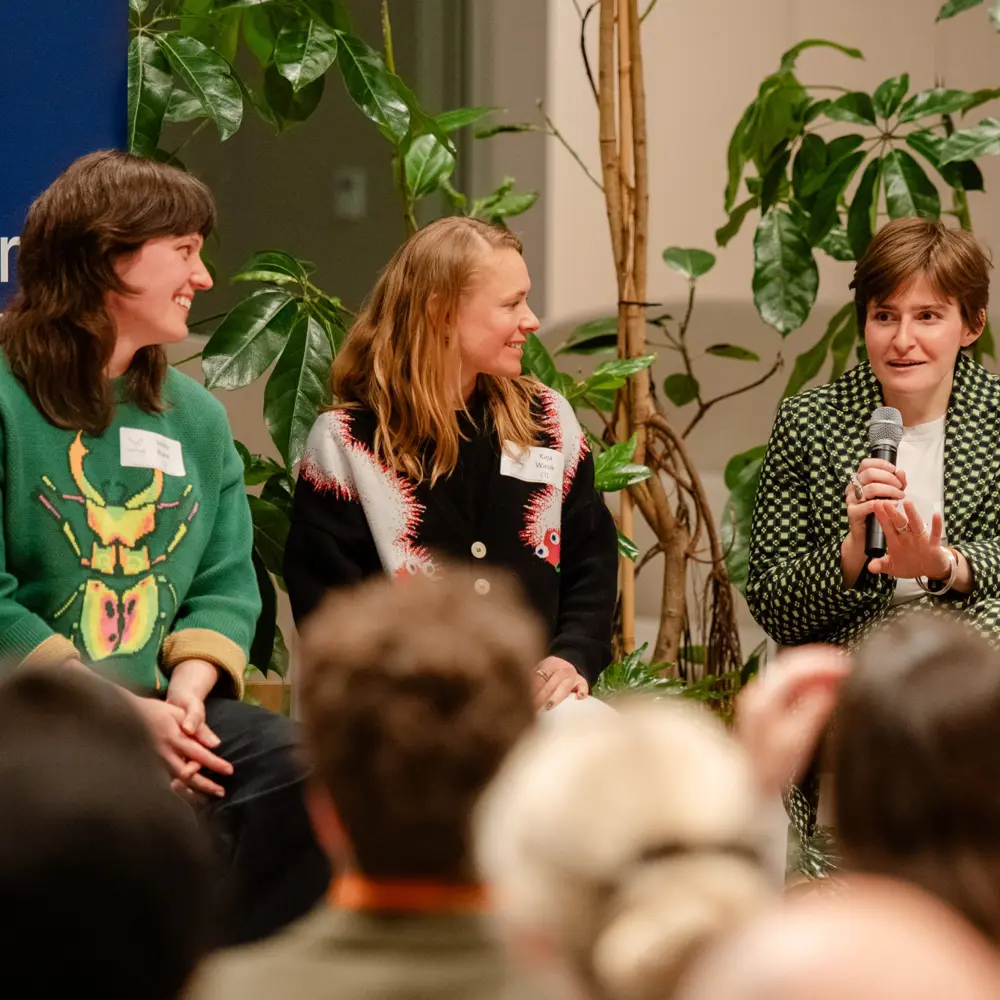
Echo Labs
At the launch of the new FROs, Kaja Wasik, Tosca Tindall, and Molly Blank posed a simple question:
Thousands of years ago, a storm could wipe out an entire population. Today, we can predict it, and reduce its impact. If we can model weather to understand and anticipate complex systems, why can’t we do the same for ecosystems?
To answer this, they’ve founded Echo Labs. Launching with a £7 million award from ARIA and aligned with both our Scoping Our Planet and Engineering Ecosystem Resilience opportunity spaces, Echo Labs’ mission is to develop and build the infrastructure for ecological intelligence, making the natural world legible to model, compare, and forecast.
Currently, three bottlenecks stand in the way: slow and costly data collection, fragmented and incompatible datasets, and models that fail to capture how ecosystems change over time. Echo Labs is designed to address these directly, combining large-scale ecosystem measurement with machine-learning models that turn observations into usable signals.
“Today, ecology generates fragmented observations but lacks the integrated representation needed to understand ecological complexity and translate it into usable signals. Ecosystems underpin our economies and societies, but we still lack the scientific infrastructure to measure and forecast ecological conditions with anything like the precision we bring to other systems. We envision a world in which global ecosystem conditions are continuously observed, modelled, and useful for science, governance, finance, and stewardship — before collapse occurs, rather than after,” says Kaja Wasik, CEO of Echo Labs.
The goal is a live, multimodal model of ecosystem condition, capable of quantifying resilience, forecasting change, and helping us understand the living systems the economy depends on. This would make the state of nature measurable and predictable, enabling earlier action on ecosystems under stress, better environmental policy decision-making, and a shift towards preventing damage like biodiversity loss, rather than only reacting to it.
“We still understand ecosystems far less precisely than we understand many engineered systems, even though our societies depend on them just as profoundly. Echo Labs is tackling an important part of that gap by developing tools for ecological monitoring and forecasting,” says Yannick Wurm, ARIA Programme Director.
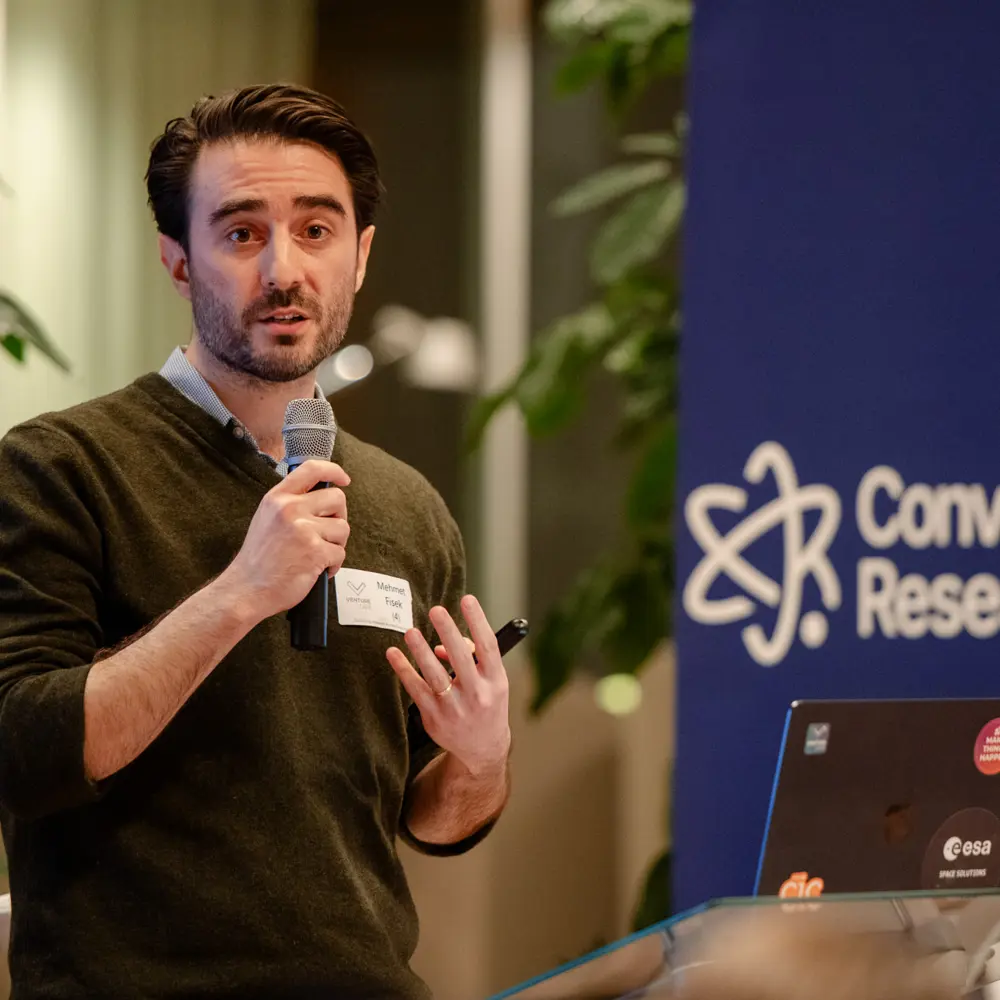
Meridial
Where Echo focuses on ecological intelligence, Meridial tackles a different bottleneck: our ability to understand the brain at the level at which it actually operates.
To date, connectomics, the mapping of neural circuits at synapse resolution, has largely been confined to static snapshots. What we’re missing is the ability to track these circuits as they function and change over time in living systems.
Meridial, launching with a £14 million award from ARIA, is building a microscopy platform designed to map and track synaptic connections in living animals over time.
“Many of the most important questions in neuroscience and brain health relate to how living circuits change over time. Today, when we seek to observe such changes with high resolution, we are often limited by scale, or must infer dynamics from static snapshots of extracted tissue. Meridial is being built to overcome these challenges with a platform for mapping and tracking synaptic connections in living animals over extended periods,” says Mehmet Fisek, Founder and CEO of Meridial.
By making it possible to observe how brain connectivity changes across development, disease, learning, and therapeutic intervention, Meridial aims to help bridge an important gap between molecular mechanisms and circuit-level function. Over its funded period, Meridial will develop and operate systems capable of tracking synaptic connections across local and long-range circuits over extended timescales.
The goal is practical: to give researchers a tool they can use to test drugs more effectively and improve outcomes for disorders of the central nervous system.
Meridial is aligned with our Scalable Neural Interfaces opportunity space. “Progress in brain science and brain health has been constrained for too long by the limits of our tools. Meridial is exciting because it is building infrastructure that could let researchers observe how neural circuits change over time, rather than inferring those changes indirectly after the fact,” says Jacques Carolan, ARIA Programme Director.
An institutional shift
Meridial and Echo Labs sit within a small but growing UK FRO landscape that includes Bind Research, a UK-based not-for-profit focused on making disordered proteins druggable.
These efforts indicate a broader institutional shift: one in which new scientific organisations are designed not around disciplines alone, but around bottlenecks, capabilities, and the shared infrastructure required to unlock downstream progress.
“Scientific progress is often slowed not by a lack of ideas, but by a lack of institutions designed to turn important ideas into shared capabilities,” says Anastasia Gamick, President and Co-founder of Convergent Research.
“FROs are built for exactly that gap. We’re excited to see this model continue to take root in the UK through organisations that are technically ambitious, tightly scoped, and built to create public goods with broad downstream value. We can’t wait to share more from these two teams and our ongoing work with ARIA.”
Meridial and Echo Labs are expanding their teams in 2026. Find out more information about each organisation, including information about career opportunities and technology releases, on their websites.