
10 April 2026

Exploring Climate Cooling: a year of progress

Programme Director Mark Symes provides a status update on our funded projects and the importance of building a scientific evidence base on climate cooling.

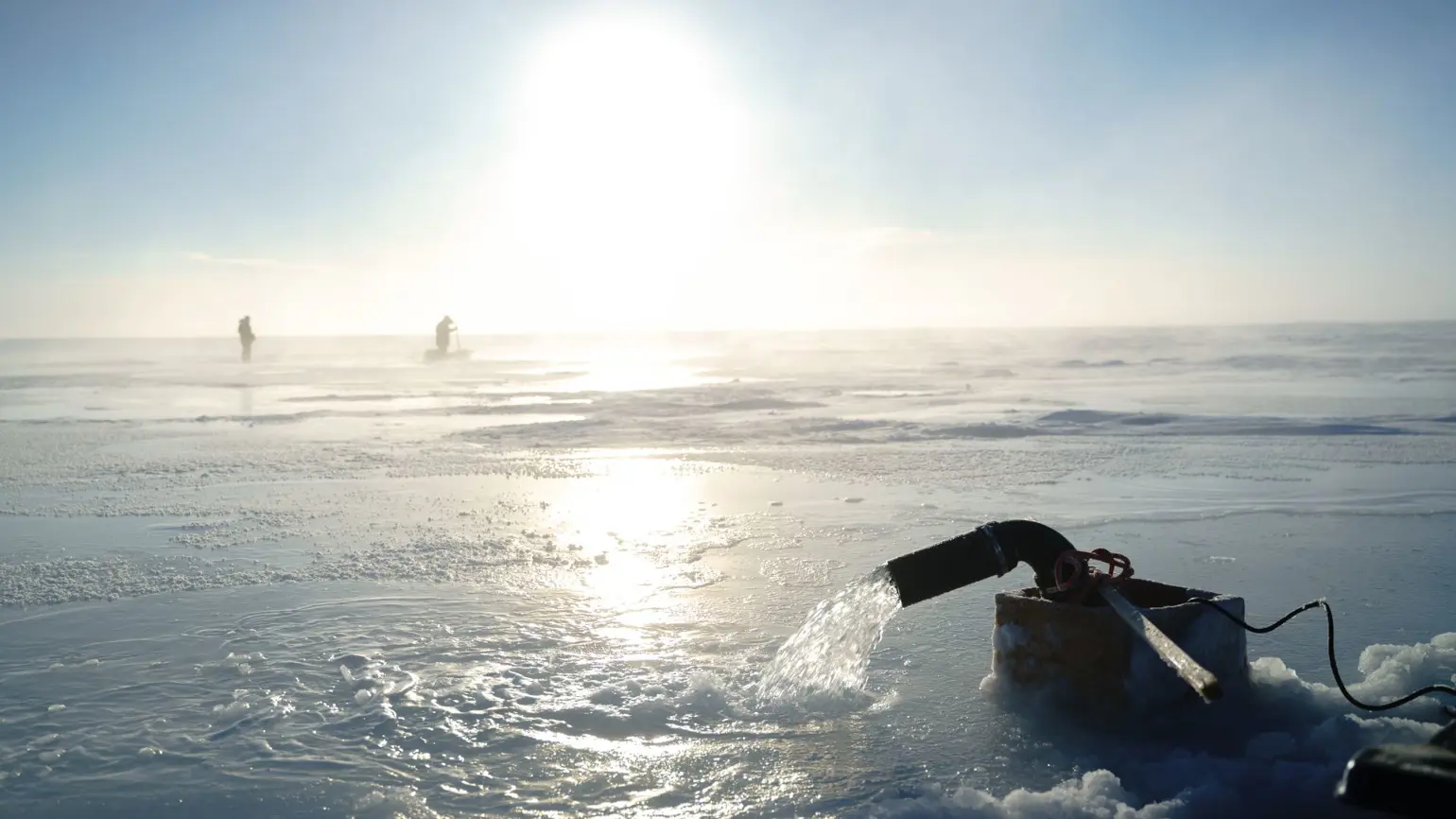
Real Ice team working on a pump in the ice fields” width=

Real Ice research site in Cambridge Bay, February 2026. Image courtesy of Brodie Larocque, Nunavut Tunngavik


Cutting emissions is the only sustainable path out of the climate crisis. But the speed of decarbonisation is not keeping pace with the speed of warming. Current policies put us on track for at least 2.8 degrees of warming above pre-industrial levels – an increase which would have a profound impact across the globe. 

In this context, there has been growing interest in approaches that could temporarily reduce temperatures while the world decarbonises. Because the uncertainties surrounding these climate cooling methods are so significant, some argue that the safest approach would be to avoid research entirely. Yet, any risk of advancing our scientific understanding should be weighed against the significant risks we foresee unfolding with 2.8 degrees of global heating. 

At ARIA, we see uncertainty as the very reason we must ask the hard questions. The absence of objective scientific evidence leaves us at risk of a future where climate cooling technologies are deployed without just deliberation or meaningful public scrutiny. Positive futures require us to take a middle path between inaction and over-confidence, and to begin taking responsible steps now: transparent rigorous research, openly shared scientific findings, and principled governance.  

This is exactly why ARIA's Exploring Climate Cooling programme exists. In the absence of reliable data and international agreement in this space, we are building an independent evidence base to understand if these approaches could ever be safe, effective and governable. We believe society deserves informed answers on a topic of this consequence, rooted in independent, publicly-funded, transparent research. Our goal is to ensure that if the world ever faces a decision on climate cooling approaches, it’s informed by rigorous scientific evidence.

Progress across the portfolio 


In spring 2025, ARIA announced funding for 22 research projects under the Exploring Climate Cooling programme, backed by £56.8 million. The programme spans a range of disciplines – atmospheric physics, chemistry, climate modelling, governance, ethics, and ecology – and includes teams from universities and research institutions across the UK and internationally.

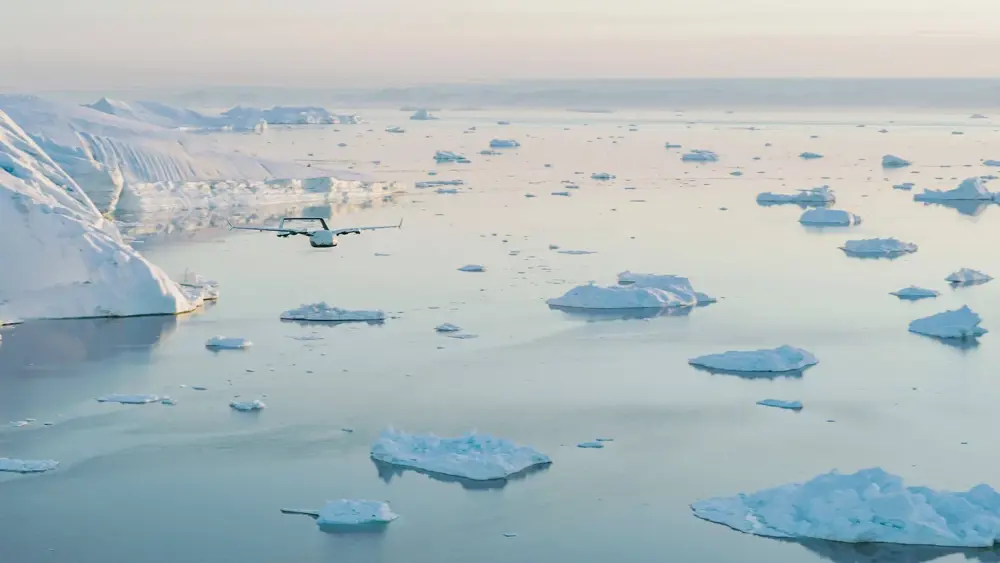
Now, almost a year on, these teams are making tangible progress. In the Philippines, a team led by Lorena Sabino is running focus groups with people living at the foot of live volcanoes. By studying these natural analogues to stratospheric aerosol injection, the researchers are using lived experience to better understand how changes in the local weather caused by eruptions impact local communities. In Bristol, UK, Matthew Watson and his team are developing monitoring drones which fly through volcanic eruptions to study how naturally occurring particles interact with the atmosphere. As part of our governance work stream, a team from the Centre for Future Generations and the University of Leeds are using surveys, focus groups and convenings with policymakers and civil society to interrogate how climate cooling approaches could be responsibly governed at the global level, in a range of future scenarios. 

These are just a few examples of where the programme is already making important contributions to the global knowledge base. 

An update on outdoor experiments


In a small number of cases, the scientific questions the programme is asking cannot be answered by modelling or indoor research alone. For these, the programme funds carefully controlled outdoor experiments, strictly limited in size and duration, and subject to a rigorous, multi-stage approval process. Through this meticulous preparation, we aim to set the gold standard for safety, responsibility and community engagement in the field.  

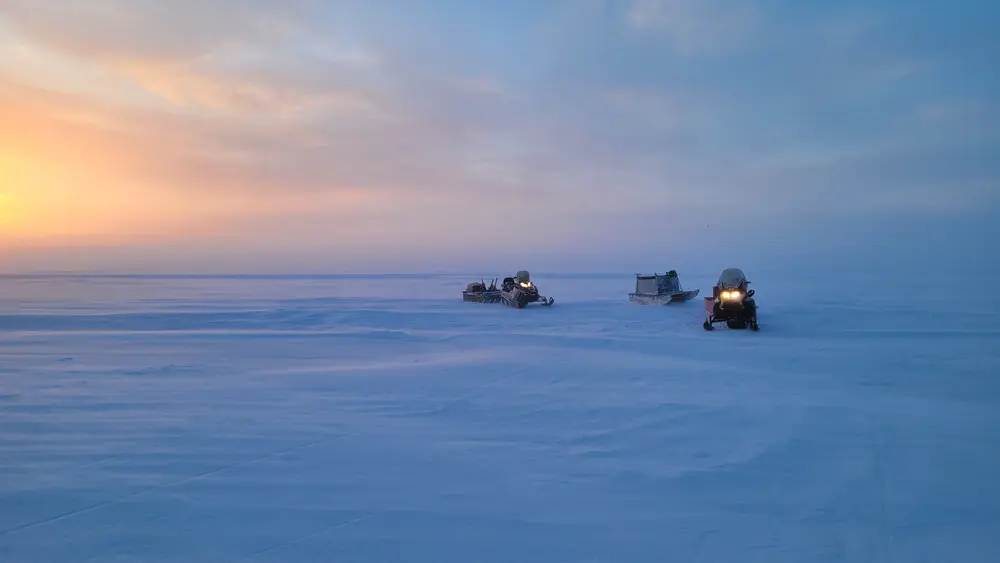
The Re-thickening Arctic Sea Ice (RASI) project, led by the University of Cambridge, is conducting field work in Nunavut, northern Canada to explore how pumping sea water onto existing sea ice during the polar winter can slow the melting of the ice in the summer. We’re also supporting a team from Southern Cross University in the Great Barrier Reef to continue their investigations into the real-world effectiveness of marine cloud brightening, building upon pre-existing site requirements and community relationships –  with further outdoor experimentation planned for coming years.

The other three outdoor experiments remain in the first phase of planning: Technical design and pre-site selection. This means the teams are scoping potential sites – assessing logistical, technical, and scientific suitability; considering potential impacts on the local environments; and making initial contact with key stakeholders such as landowners and local authorities. 

No locations have yet been confirmed for any outdoor experiments in the UK. Once teams have completed site scoping, they will move into a formal engagement and impact assessment phase. This will involve in-person engagement with local communities, including two-way dialogue and the scope to co-design elements of the experiments. An independent environmental impact and legal assessment will be conducted and published, giving communities the opportunity to review the findings and request changes to the experiment plan. 

Following this, the experiment plans – including full documentation of the community engagement process – will be submitted to the programme's independent Oversight Committee for scrutiny. Only if the experiment passes every stage of this rigorous evaluation, and secures final approval from ARIA’s CEO, will it proceed.

You can read more about the stages of engagement for these outdoor experiments here.

I have valued the rigour, thoughtfulness and principled approach these teams have taken as they develop their plans, and I’m proud of the way they’re advancing this field with safety and public responsibility front of mind.

Looking ahead


The Exploring Climate Cooling programme is still in its early stages. The most consequential scientific findings are still to come, and some of the most important questions – about efficacy, about risk, about governance – will take time to answer properly.

Even at this early stage, the programme is doing exactly what it was designed to do: building an objective, transparent evidence base to help us navigate a field the world urgently needs to understand. Every result contributes to that evidence base and will be made publicly available for scrutiny by the global scientific community.

We will continue to share updates as the programme develops. In the meantime, you can explore the full portfolio of funded projects, read the Oversight Committee's publications, and find out more about how outdoor experiments are governed at the link below.
 

Discover the Exploring Climate Cooling programme


10 April 2026

Exploring Climate Cooling: a year of progress

Programme Director Mark Symes provides a status update on our funded projects and the importance of building a scientific evidence base about climate cooling.

Real Ice team working on a pump in the ice fields” width=

Real Ice research site in Cambridge Bay, February 2026. Image courtesy of Brodie Larocque, Nunavut Tunngavik


Cutting emissions is the only sustainable path out of the climate crisis. But the speed of decarbonisation is not keeping pace with the speed of warming. Current policies put us on track for at least 2.8 degrees of warming above pre-industrial levels – an increase which would have a profound impact across the globe. 

In this context, there has been growing interest in approaches that could temporarily reduce temperatures while the world decarbonises. Because the uncertainties surrounding these climate cooling methods are so significant, some argue that the safest approach would be to avoid research entirely. Yet, any risk of advancing our scientific understanding should be weighed against the significant risks we foresee unfolding with 2.8 degrees of global heating. 

At ARIA, we see uncertainty as the very reason we must ask the hard questions. The absence of objective scientific evidence leaves us at risk of a future where climate cooling technologies are deployed without just deliberation or meaningful public scrutiny. Positive futures require us to take a middle path between inaction and over-confidence, and to begin taking responsible steps now: transparent rigorous research, openly shared scientific findings, and principled governance.  

This is exactly why ARIA's Exploring Climate Cooling programme exists. In the absence of reliable data and international agreement in this space, we are building an independent evidence base to understand if these approaches could ever be safe, effective and governable. We believe society deserves informed answers on a topic of this consequence, rooted in independent, publicly-funded, transparent research. Our goal is to ensure that if the world ever faces a decision on climate cooling approaches, it’s informed by rigorous scientific evidence.

Progress across the portfolio 


In spring 2025, ARIA announced funding for 22 research projects under the Exploring Climate Cooling programme, backed by £56.8 million. The programme spans a range of disciplines – atmospheric physics, chemistry, climate modelling, governance, ethics, and ecology – and includes teams from universities and research institutions across the UK and internationally.

Now, almost a year on, these teams are making tangible progress. In the Philippines, a team led by Lorena Sabino is running focus groups with people living at the foot of live volcanoes. By studying these natural analogues to stratospheric aerosol injection, the researchers are using lived experience to better understand how changes in the local weather caused by eruptions impact local communities. In Bristol, UK, Matthew Watson and his team are developing monitoring drones which fly through volcanic eruptions to study how naturally occurring particles interact with the atmosphere. As part of our governance workstream, a team from the Centre for Future Generations and the University of Leeds are using surveys, focus groups and convenings with policymakers and civil society to interrogate how climate cooling approaches could be responsibly governed at the global level, in a range of future scenarios. 

These are just a few examples of where the programme is already making important contributions to the global knowledge base. 

An update on outdoor experiments


In a small number of cases, the scientific questions the programme is asking cannot be answered by modelling or indoor research alone. For these, the programme funds carefully controlled outdoor experiments, strictly limited in size and duration, and subject to a rigorous, multi-stage approval process. Through this meticulous preparation, we aim to set the gold standard for safety, responsibility and community engagement in the field.  

The Re-thickening Arctic Sea Ice (RASI) project, led by the University of Cambridge, is conducting field work in Nunavut, northern Canada to explore how pumping sea water onto existing sea ice during the polar winter can slow the melting of the ice in the summer. We’re also supporting a team from Southern Cross University in the Great Barrier Reef to continue their investigations into the real-world effectiveness of marine cloud brightening, building upon pre-existing site requirements and community relationships –  with further outdoor experimentation planned for coming years.

The other three outdoor experiments remain in the first phase of planning: Technical design and pre-site selection. This means the teams are scoping potential sites – assessing logistical, technical, and scientific suitability; considering potential impacts on the local environments; and making initial contact with key stakeholders such as landowners and local authorities. 

No locations have yet been confirmed for any outdoor experiments in the UK. Once teams have completed site scoping, they will move into a formal engagement and impact assessment phase. This will involve in-person engagement with local communities, including two-way dialogue and the scope to co-design elements of the experiments. An independent environmental impact and legal assessment will be conducted and published, giving communities the opportunity to review the findings and request changes to the experiment plan. 

Following this, the experiment plans – including full documentation of the community engagement process – will be submitted to the programme's independent Oversight Committee for scrutiny. Only if the experiment passes every stage of this rigorous evaluation, and secures final approval from ARIA’s CEO, will it proceed.

You can read more about the stages of engagement for these outdoor experiments here.

I have valued the rigour, thoughtfulness and principled approach these teams have taken as they develop their plans, and I’m proud of the way they’re advancing this field with safety and public responsibility front of mind.

Looking ahead


The Exploring Climate Cooling programme is still in its early stages. The most consequential scientific findings are still to come, and some of the most important questions – about efficacy, about risk, about governance – will take time to answer properly.

Even at this early stage, the programme is doing exactly what it was designed to do: building an objective, transparent evidence base to help us navigate a field the world urgently needs to understand. Every result contributes to that evidence base and will be made publicly available for scrutiny by the global scientific community.

We will continue to share updates as the programme develops. In the meantime, you can explore the full portfolio of funded projects, read the Oversight Committee's publications, and find out more about how outdoor experiments are governed at the link below.
 

Discover the Exploring Climate Cooling programme


Meet the Programme Director

Mark Symes

Mark is an electrochemist, with a 15-year career developing sustainable fuels in the drive towards net zero. He joined ARIA from the University of Glasgow, where he is Professor of Electrochemistry and Electrochemical Technology.

Follow Mark on LinkedIn

Mark Symes