
3 June 2026
Precision Neurotechnologies: Programme progress and early signals
In early 2024, ARIA launched its Precision Neurotechnologies programme, led by Programme Director Jacques Carolan. We sat down with Jacques to discuss the early technical signals emerging from the research, the strength and diversity of the UK neurotechnology ecosystem, and how early momentum has already led to the design of a complementary second programme.
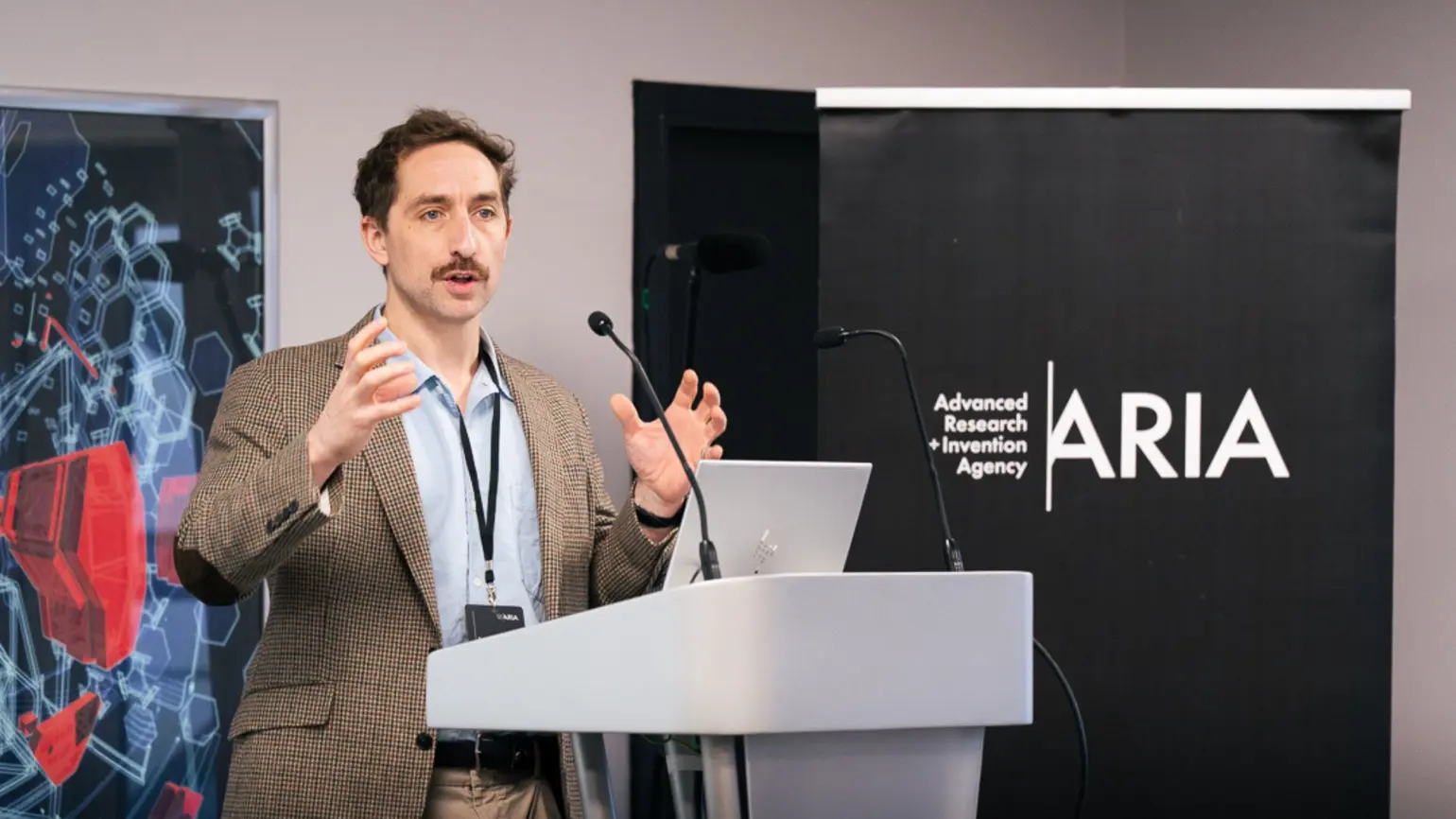
One year into funding the programme Creators, what are you most excited about?
Consistently, we are seeing teams move incredibly quickly. For instance, Sonalis has gone from nothing to producing a helmet and measuring the acousto-electric effect in a tank – essentially building a V1 system. The speed at which they have moved is incredible.
We also already have early signals that cell-type specific modulation is possible. That was a key thesis of the whole programme – using electronics for that level of control – so it’s exciting to have early signals validating it.
Building off that, you wrote a thesis focused on approaching the brain as an electrical system. How do you feel about that hypothesis today? Do these early signals make you want to validate and double down, or are you seeing things that challenge it?
These early signals have really validated that we can get that level of control and precision. There are two core theses to the programme: First, that you can build these technologies. Second, that if you build them, you can do something useful with them.
We are pushing forward on both fronts, and I am much more confident now in the first part because of the early signals – that is actually quite remarkable.
On the second part – whether we can do something useful with them – that is a question for both the broader field and our programme. We are not quite at the point of having those early signals yet within the programme because these are much bigger projects with huge computational components, so it is still early days. But the thesis that circuits are critical is absolutely still there, and the broader field has provided examples that make people want to double down on this. I am much more confident about having circuit-level access now.
How would you describe the community around neurotechnology here in the UK?
There is a core of exceptional technologists working on neurotechnologies in the UK, and we are giving them permission to work on really hard, ambitious problems.
But a big part of my thesis was to get people who were not originally thinking about the brain interested in neurotechnologies. Whether it is geophysicists who map the ground – which is the team we built around Sonalis – or people working on gene therapies or developing new AAVs who did not previously think of themselves as neurotechnologists – these are people who would not necessarily go to a traditional UK neurotechnology conference. By creating this centre of mass, you get people with such diverse expertise in one room, leading to really interesting, non-linear interactions.
What have you learned in the past year, and how are you applying that to your new programme and its focus on scaling neurotechnologies, particularly so?
These two programmes are really complementary. It was always in the back of my mind: if we can build these technologies, how on earth are we going to get them to people? Are there fundamental breakthroughs that will enable radically new scale paradigms? The second programme, Massively Scalable Neurotechnologies, aims to select that different part of the phase space.
In terms of the nitty-gritty of building a programme, I have learned a lot. I have found more efficient ways to handle discovery and how to reach out to new communities that might be less on my radar – like robotics or immune engineering – to get them involved in the bigger neurotech effort. The new programme also has a very different design and structure. It features a phased approach with very clear metrics, which should make it easier to coordinate across people.
You’re looking to do more work with communities focused on lived experience?
One hundred per cent. We can make that a core part of the second programme, and we are currently figuring out what that looks like for our first programme. Because we now have such a big emphasis on translation, including the voices of people with lived experience is essential – both to build things people actually want to use, and to get the creators fired up. We are doing a solid job, but we can do better, and that will be a focus for the next year.
The user perspective is often missing from discussions around neurotechnologies; you mostly hear the voices of the people building the companies. Sharing the stories of the users – the realities, both positive and negative, of living with these conditions – is going to be critical for broader adoption.
Looking ahead, what feels like the single most significant milestone or focus for the programme in the year ahead?
The reality is that biology projects take time to get up and running due to operational and scientific reasons. One year in, the next year is going to be about results. This is where we really start getting clear signals of what is working and what is not.
From a broader programme perspective, we are really pushing on translation next year. We are building a bespoke translation strategy and giving our teams the resources to do this, so that when we do start seeing technical signals, we are ready to get these things out into the world.
What do you think could be possible in five years based on what you are seeing?
There is an immense appetite for this all across the board. Our partners at the MHRA want this to happen too. In five years, I absolutely believe we could have early clinical studies of devices or systems developed within this programme. The mechanisms are in place to create a pathway toward that.
That is incredibly exciting. Is there anything else you feel particularly encouraged by?
Just the overall groundswell we are driving across the programme, the broader opportunity space, regulation, policy, and young innovators applying to our seeds. If ARIA did not exist, I believe a good chunk of this would not be happening, or it might happen five to ten years in the future. ARIA is seeding this groundswell, and it shows that the UK can be right at the centre of it. We give people permission to dream big, and seeing that play out is wonderful.
What do you wish people who are not in this space knew or understood about the potential of neurotechnology?
I wish people understood the broad potential impact this field can have. Brain disorders affect all of us. Someone with mild depression is not going to go through brain surgery, but there are technologies being developed that can help understand conditions and triage people toward the correct treatment – whether that is therapy, SSRIs, or neuromodulation.
One of our clinical advisors, Leanne Williams at Stanford, has shown that you can put individuals with clinical depression into fMRI machines, map their brain connectivity, and use large datasets to figure out the right first-line treatment. Currently, first-line psychiatric treatment is essentially a dice roll with a lot of side effects. We are not looking at that specific mapping project, but the tools we are developing could entirely be used for that type of triaging. It is going to be one of the most important near-term use cases.
So it sounds like a new era of personalised, precision brain care might be possible?
Absolutely. Currently, the way we treat the brain is very rudimentary compared to how we treat something like cancer, where you get a biopsy to understand the exact treatment needed. Precision medicine historically has not worked broadly because making personalised drugs is insanely expensive. We believe a small set of platform technologies can address a really broad range of conditions – offering personalisation without the cost of rebuilding something from scratch every time.
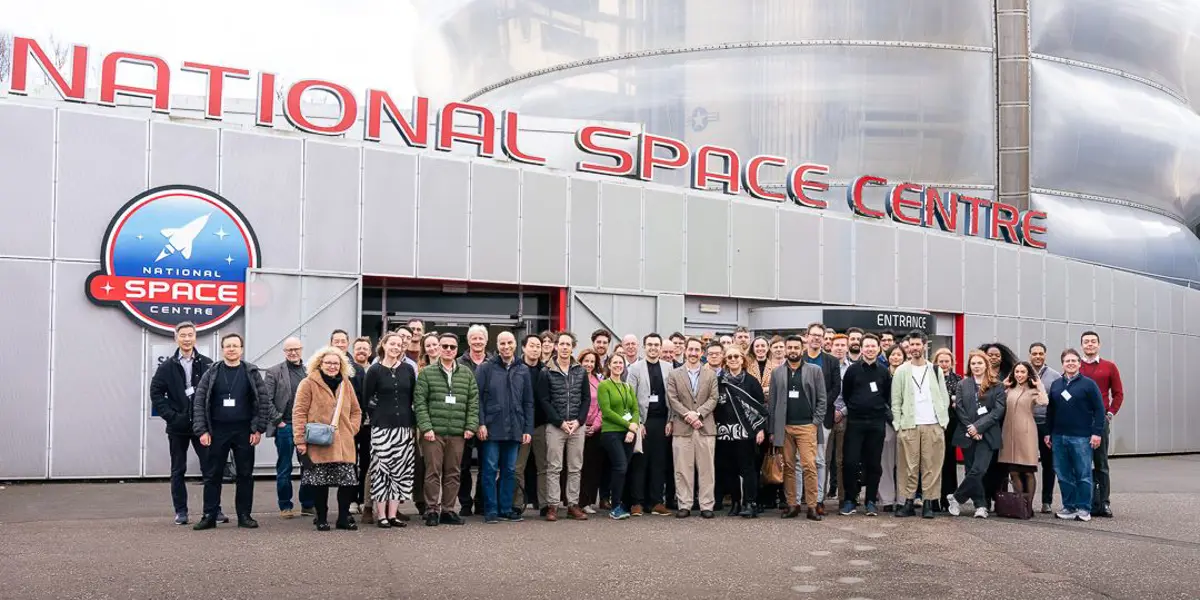
Highlights from our annual Creator gathering
We caught up with the Precision Neurotechnologies community, asking them to reflect on the programme’s first year.