
In February we launched the Accelerated Adaptation programme, backed by £54m. Programme Director Yannick Wurm shares why we’re exploring pathways to accelerate the adaptation of wild species.
For much of my scientific life, I was instinctively wary of deliberate human interventions in nature. Natural systems are highly complex, and I (like many others) have been frustrated by the hubris of those who have underestimated the risk of things going wrong. Countless ‘no-risk’ interventions have had detrimental consequences; even well-intentioned conservation breeding programmes can increase population numbers while collapsing genetic diversity and reducing long-term resilience.
I’ve spent most of my career as an academic, mostly focused on understanding the tradeoffs and genetic bases of social evolution in ants – the world’s coolest 20,000 species (that’s a discussion for another day). But having initially trained as an engineer I had a latent desire for more immediate impact. Driven by my frustration that we have struggled to reverse pollinator declines, I realised that new technologies could help fill data gaps and, in turn, address knowledge gaps. My team at Queen Mary University of London also pioneered the development of high-resolution approaches for measuring pollinator health.
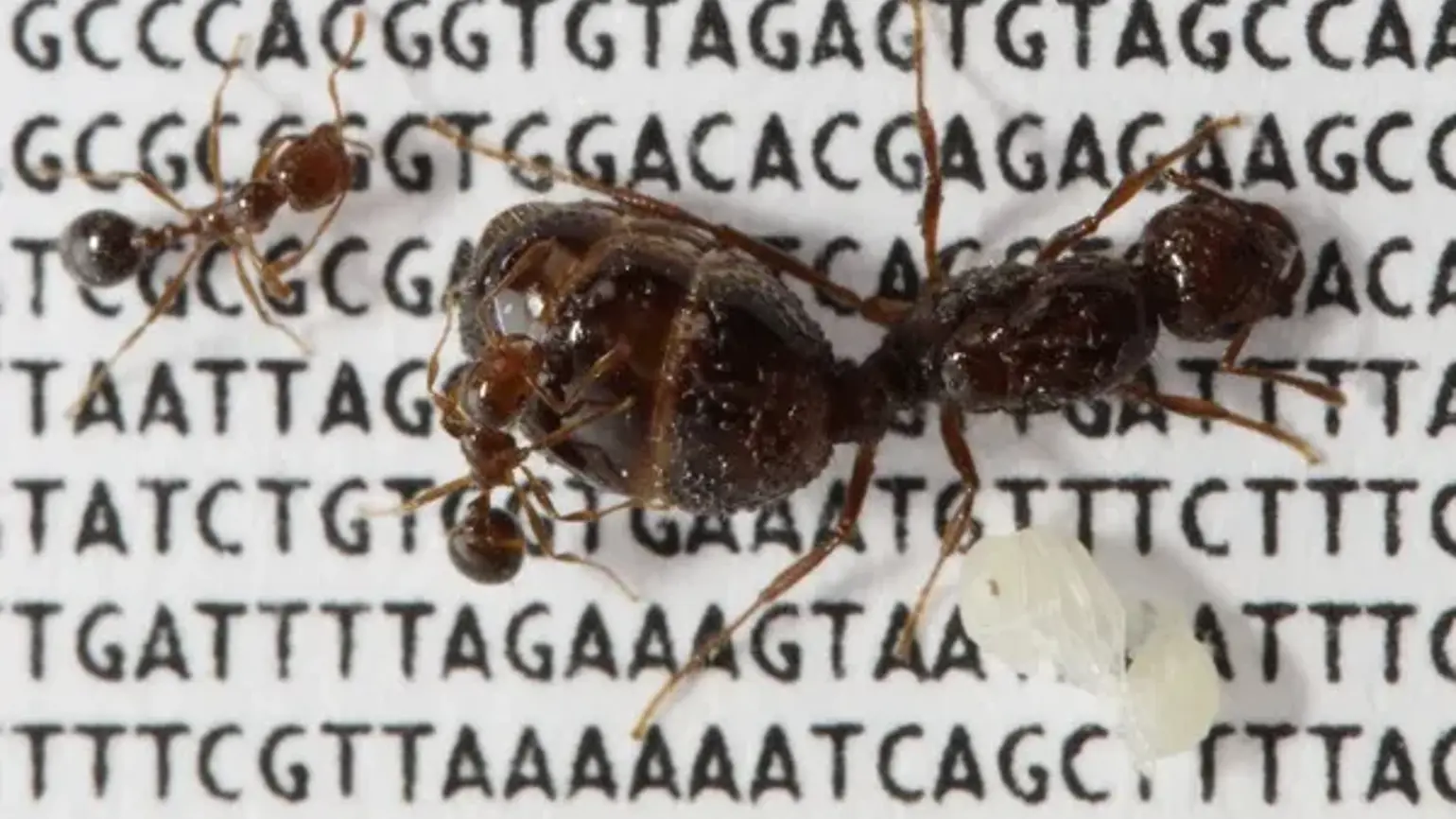
Red fire ant Solenopsis invicta (queen, two adult workers, one worker pupa) on the genome sequences of their ‘social supergene’ that determines whether societies of this species accept multiple queens or kill any excess queens (Nature 2013). The ‘supergene’ architecture of this complex social trait enabled the trait to spread across species boundaries (Nature Communications 2022). Copyright: Romain Libbrecht & Yannick Wurm.
Joining ARIA last year as a Programme Director provided a new opportunity for impactful work. How would you steward £50m towards ‘edge of the possible’ research that could change the world? My initial aim was adjacent to my academic research: could we reverse-engineer the secrets of the ants, wasps, and termites to reveal the molecular mechanisms underpinning their impressive feats? How can a queen live orders of magnitude longer than her genetically identical siblings? How are social insects resilient to pathogens despite living in the dirt and eating raw prey? I considered expanding to other organisms – from the ability of extremophile yeti crabs to thrive on high-pressure high-temperature deep-sea vents, to the planarians and salamanders that can regrow body parts or entire bodies. Or finding ways of making agriculture more sustainable. Or predicting evolution, which could impact applications from cancer treatment to pharmaceutical production to wastewater processing.
ARIA’s process kept forcing me to think about humanity’s greatest challenges, and that brought me back to the relationship we have with nature itself. Through hundreds of conversations, >15 workshops, and by funding ARIA’s first 22 discovery projects, I was able to further appreciate how critically vulnerable our ecosystems are, how urgently humanity needs to stop and reverse the unprecedented pressures we are creating, and how vital it is to expand our existing toolkit to support nature. My engineering instinct kept surfacing: could we become as intentional in our relationship with nature as we are when we build buildings our algorithms?
There are so many challenges in this space (see our Engineering Ecosystem Resilience opportunity space). ARIA-scale programmes could focus on better measuring living organisms, or better data modelling and integration. But simply getting better at quantifying declines is insufficient. As we get better at pinpointing ecological vulnerabilities, and risks of collapse, we need to face the reality that new types of interventions may become an essential part of the toolkit to halt further irreversible decline.
This mindset shift wasn’t easy – 18 months ago I would never have thought that I might be pushing for the ideas outlined in the Accelerated Adaptation programme.
At the heart of this change is my belief that the balance of risks has shifted. Over recent decades, risks of biodiversity loss and ecological collapse have dramatically increased – now one in four animals and plants face extinction within a century. These are not fringe concerns; the World Economic Forum cites biodiversity loss and ecosystem collapse as the second largest threat that humanity faces over the next 10 years. And UK GDP is already expected to shrink up to 3% due to chronic nature degradation – that’s before considering the potential impacts of reaching any ecological or climatic tipping points.
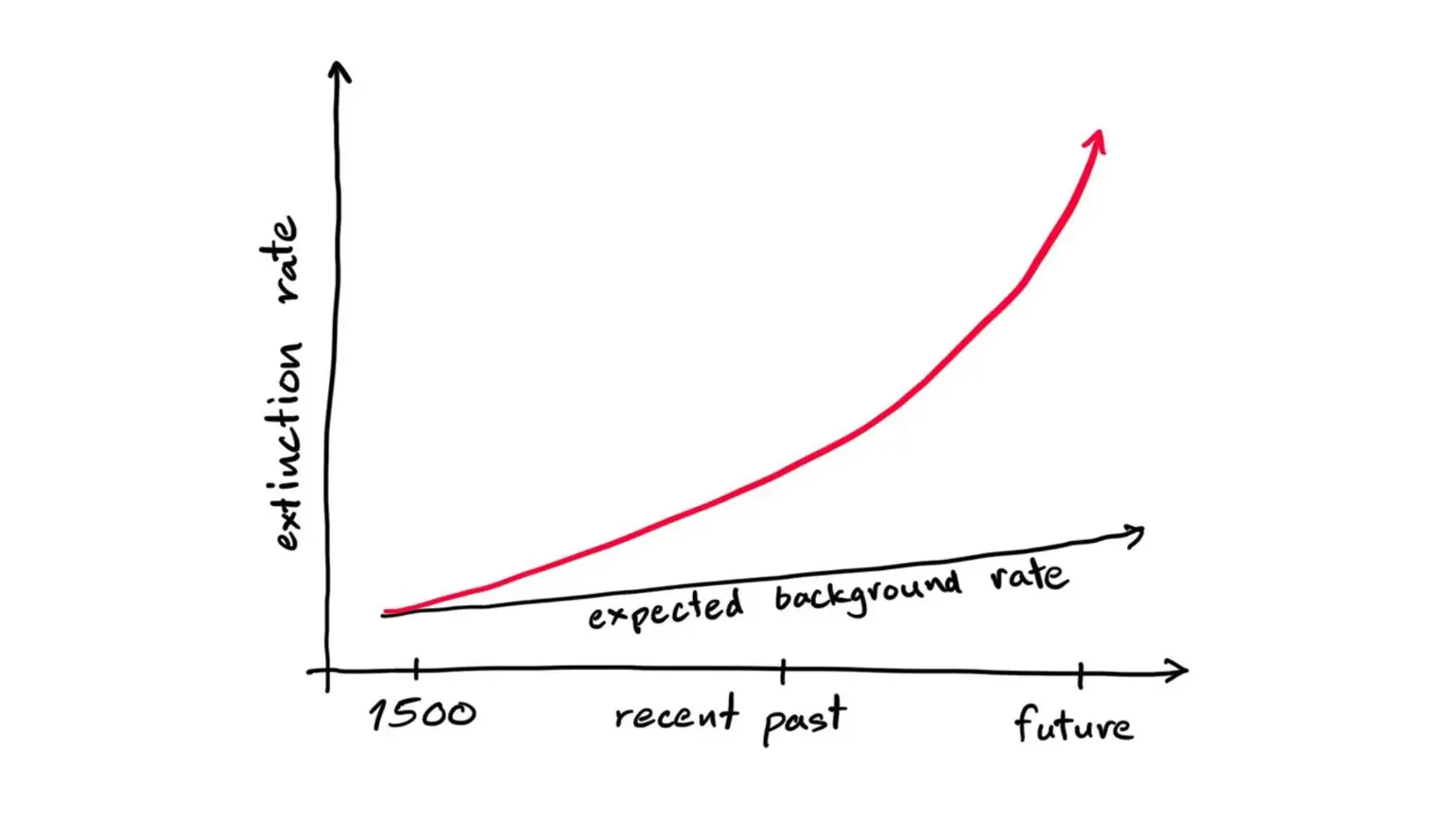
Human-driven environmental pressures, from the movement of species and pathogens to places they have never been, to the conversion of land for industrial agriculture, to our intensive use of chemicals, to climate change, have driven a dramatic increase in extinction rates of plants and animals.
The risks of intervention remain real, but the risks of maintaining the status quo have grown larger still. The question is no longer whether intervention is risky, but whether continuing on our current path guarantees failure. Building a new set of tools that can complement and augment well-established conservation approaches could provide the step-change required to help transform the impact of our conservation efforts.
We can already see the direction of consensus beginning to shift. Most notably, the International Union for the Conservation of Nature (IUCN) decisively adopted a landmark policy framework for the responsible, science-based use of synthetic biology in nature conservation (88% in favour of Motion 87). And work on coral reefs provides a key example – in the face of total collapse as a result of rapid warming and acidification, conservationists who would once have rejected the most extreme forms of active intervention are now reconsidering.
But what should breakthrough tools that could complement existing nature protection approaches look like? What we’re proposing with the £54m Accelerated Adaptation programme is not a single technology or an unquestioning embrace of biotechnology. It is a spectrum of approaches, many of which are still relatively new in conservation contexts. For example, could we place oak saplings in climate chambers simulating 2100 conditions and select the survivors for planting? Could we develop vaccines that protect amphibians against the pathogens decimating their populations? Such approaches sit alongside transient physiological or molecular treatments that enhance stress tolerance without permanent genetic change. Crucially, the programme deliberately avoids sweeping, broad-brush approaches like uncontrollable gene drives aimed at collapsing populations. Our approach is not about domination of nature, or replacing well-established methods, but about expanding our toolkit in a disciplined, responsible way.
The boundaries of current regulatory frameworks, important ethical questions, and gaps in risk modelling all argue for caution. That is why the programme focuses on indoor, contained research environments, and why we are embedding ethical oversight from the outset — through an ethical advisory committee, dedicated ethics research teams, and a requirement that every funded project engages with the social and ethical dimensions of its work from day one. It is also why I have resisted narrowing the effort to a single species or a single philosophical stance. What matters most is outcome, not ideology. Different systems will require different approaches, and progress will come from constructive competition between the best ideas, regardless of where they originate. By programme end, we aim to have demonstrated measurable increases in resilience in at least two wild species in contained environments — and to have laid the scientific, ethical, and technical foundations for responsible real-world translation.
I did not abandon my scepticism. I refined it. The same instinct that made me wary of intervention now makes me wary of inaction; because the evidence no longer supports treating ecosystem collapse as something we can simply hope to avoid. The challenge before us is understanding how to intervene with humility, rigour, and an unwavering commitment to understanding risk.
If this resonates, we want to hear from you. We are looking for cross-disciplinary teams: ecologists, conservationists, evolutionary biologists, molecular biologists, engineers, ethicists, modellers — who believe they can make meaningful progress responsibly on accelerating adaptation in wild species.
The funding call for this programme is now closed.