Giving robot hands a sense of slip
Imagine opening a medicine bottle. Your fingertips continuously register its shape, pressure and friction, and adjust your grip before the lid visibly moves.
For a robot, this movement remains challenging – cameras can locate the bottle, but once the hand closes around it, they can’t directly sense whether it is secure, deforming or beginning to slip.
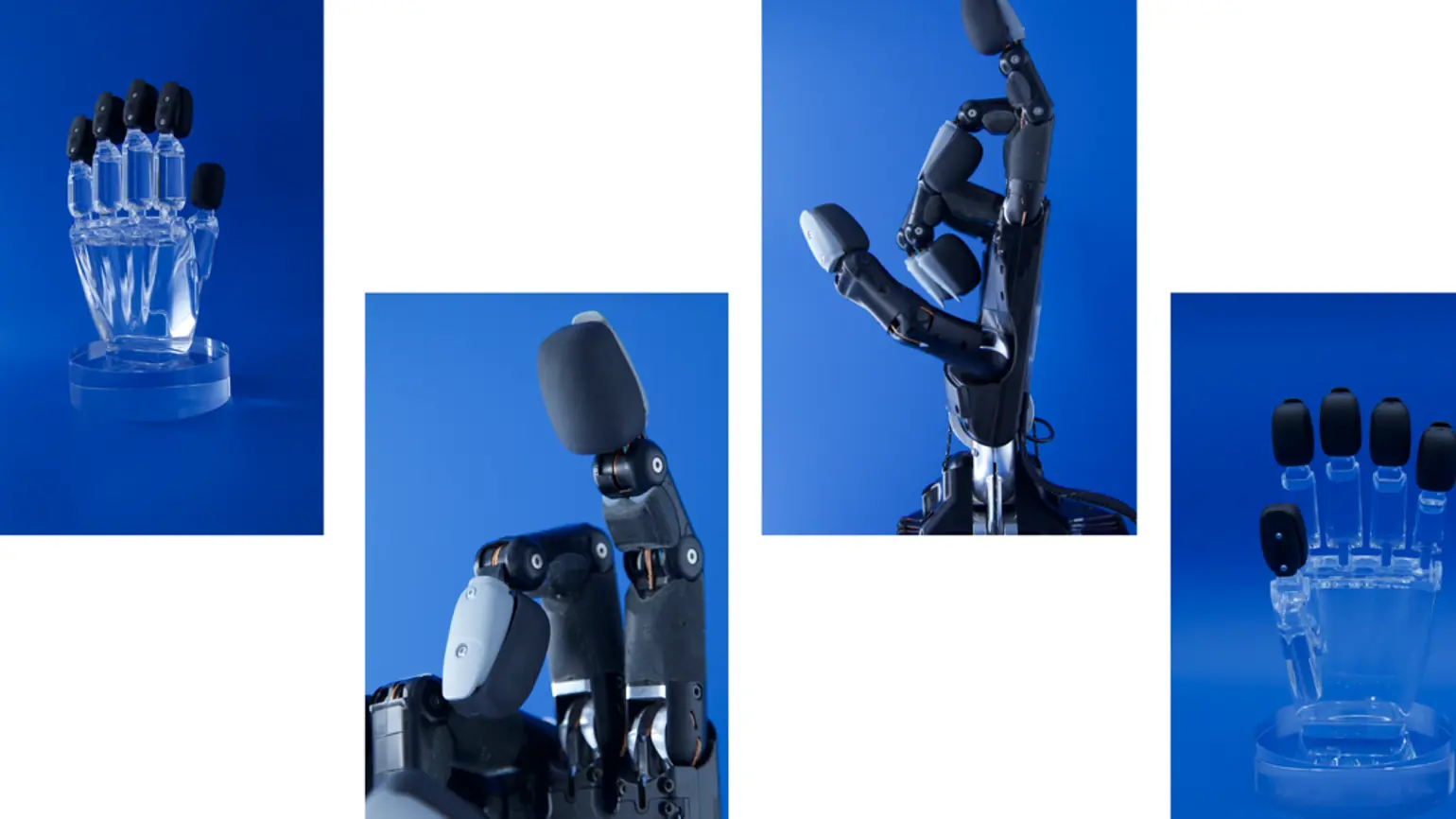
TACTO is designed to address this gap: an adaptable tactile electronic skin developed by Touchlab. Built to fit over 80% of grippers and integrated across 7+ dexterous hands, its integration into the Shadow Robot Dexterous Hand was showcased at ICRA in June 2026.
Touchlab founder Dr Zaki Hussein and Shadow Robot Director Rich Walker are both Creators in our Robot Dexterity programme. We spoke to Zaki and Rich about why touch remains such a stubborn problem for robotics, what they learned from putting TACTO into a working hand, and the deceptively ordinary task that could signal meaningful progress.
Why is touch still such a difficult problem for robots?
Zaki: The difficulty starts with the physical interaction itself. Tactile sensors are part of the physical interaction, and if the sensing surface is too rigid, it can change or distort the force it is trying to measure. Human skin deforms around an object, helping us understand how pressure is distributed and how securely we are holding it. A useful robot sensor needs some of that compliance while remaining durable, consistent and manufacturable.
Rich: Dexterity also involves many points of contact working together. It isn’t enough to know that the hand has touched an object. The robot needs to understand what is happening across several fingers as the object moves within its grasp.
Think about finding a key in your pocket. You cannot see the key, but your fingers can search for it, recognise it and change their grip. Or think about using scissors: the important information comes from the contact between your fingers, the handles and the material being cut. Vision can help, but it cannot replace that local information.
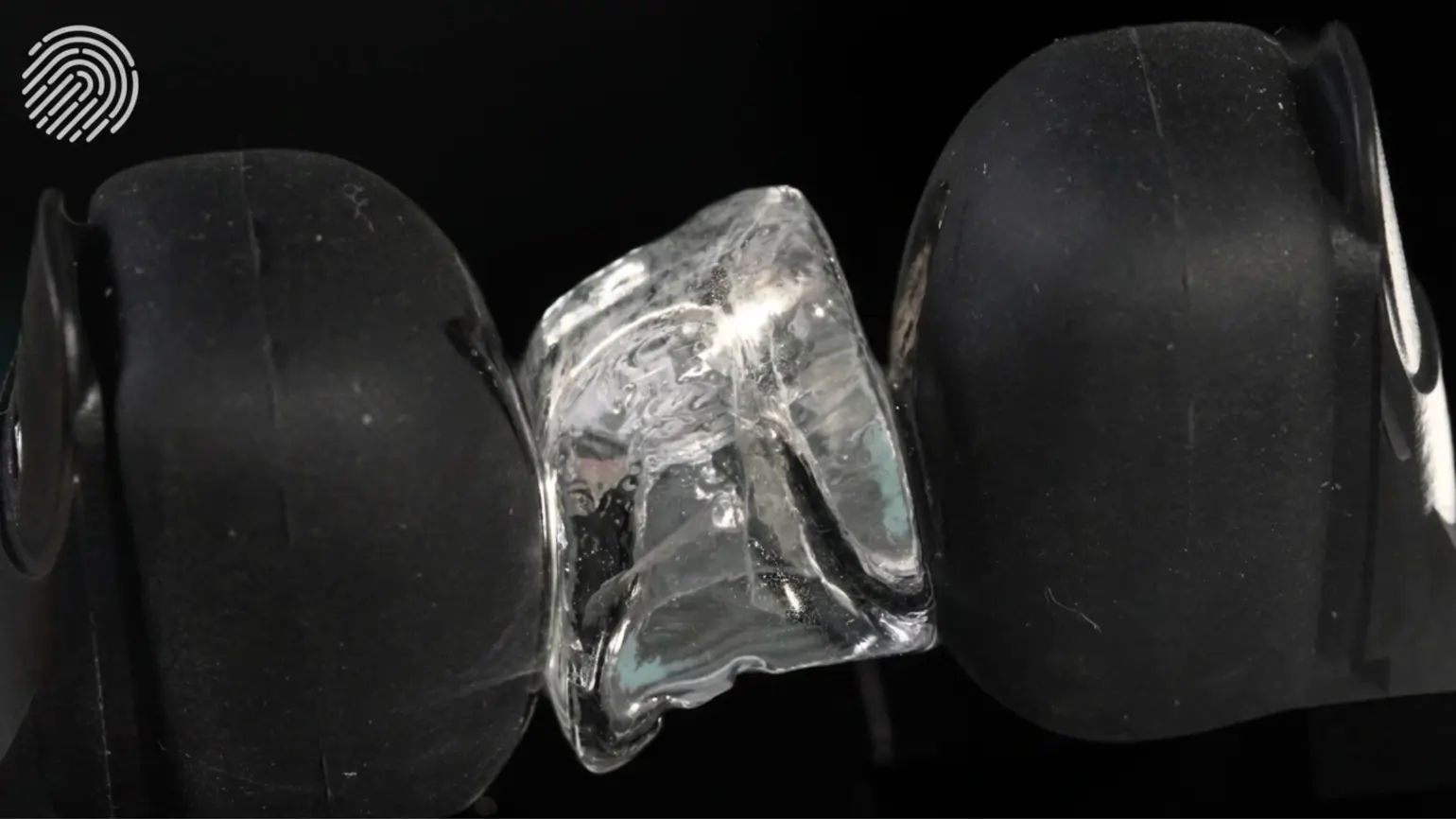
TACTO is able to hold ice, without dropping it.
What is TACTO actually sensing?
Zaki: TACTO is a tactile e-skin designed to sit on the fingertip of a robot hand. Touchlab uses printable nanocomposite materials rather than relying entirely on rigid components or expensive cleanroom manufacturing processes. The sensing surface measures how contact and force are distributed across the fingertip. That information can then be interpreted by the robot’s control system to identify events such as incipient slip: the earliest movement that indicates an object is about to slide out of the hand.
Detecting that moment matters because the robot can respond before it drops or damages the object. It might tighten its grip, reposition a finger or alter the direction of force.
Why can’t robots solve this by using more cameras?
Rich: Cameras are extremely useful, but they provide a different kind of information. Once a hand wraps around an object, the camera may no longer be able to see the important contact points. Touch gives you information where the interaction is happening.
Zaki: The engineering question is not always how to collect the largest possible amount of data. It is about identifying the signal needed to perform the task.
Biological systems separate these functions. We use vision to understand a scene and touch to manage physical contact. A robot that tries to solve every sensing problem through images may be processing far more information than it needs while still missing the signal that tells it an object is beginning to move.
The longer-term opportunity is to combine vision and touch so that each does the job it is best suited to do.
What changes when TACTO is integrated into the Shadow Hand?
Rich: The Shadow Hand provides a highly articulated mechanical platform. It can reproduce many of the movements of a human hand, but movement alone is not dexterity.
Without tactile feedback, a robot may execute a movement based on where it expects an object to be and how it expects that object to behave. With tactile feedback, the system has the beginnings of a closed loop: it can make contact, sense what happened and adjust its next action.
That doesn’t instantly produce human-level manipulation. The sensor, hand, software and control system all need to work together. But it gives researchers a much stronger basis for tasks that depend on continuous contact rather than a single, pre-programmed grasp.
Zaki: Slip detection is a useful example. In one experiment, we used an AI model to help a robot hold melting ice. The surface was changing continuously and becoming more difficult to grip, so the system needed to recognise movement and respond.
The experiment suggested that useful slip detection may not always require the most elaborate hardware or extremely high sampling rates. A well-designed sensor and a task-relevant signal can sometimes matter more than simply maximising the specification of every component.
How did the collaboration between Touchlab and Shadow Robot begin?
Rich: Shadow has experimented with many different forms of tactile sensing over the years. We deliberately try to remain technology-agnostic because different applications may need different sensors.
Touchlab brought deep knowledge of the materials inside the sensor. They were also close enough geographically for the teams to iterate together without the practical barriers that can slow down an international hardware collaboration.
The relationship had existed for some time, sometimes as collaborators and sometimes as friendly competitors. The ARIA programme created an opportunity to turn that relationship into a deeper engineering integration.
Zaki: A promising sensor and a working robot hand are not automatically a working tactile system. There is detailed integration work between them: mechanical design, electronics, communication, calibration, software and testing.
ARIA’s support gave us the time and resources to do that work properly. Touchlab could focus on what the sensing surface needed to do, while Shadow could bring its understanding of how a dexterous hand behaves in practice and what researchers need from the complete system.
What did you learn from putting TACTO in front of the robotics community at ICRA?
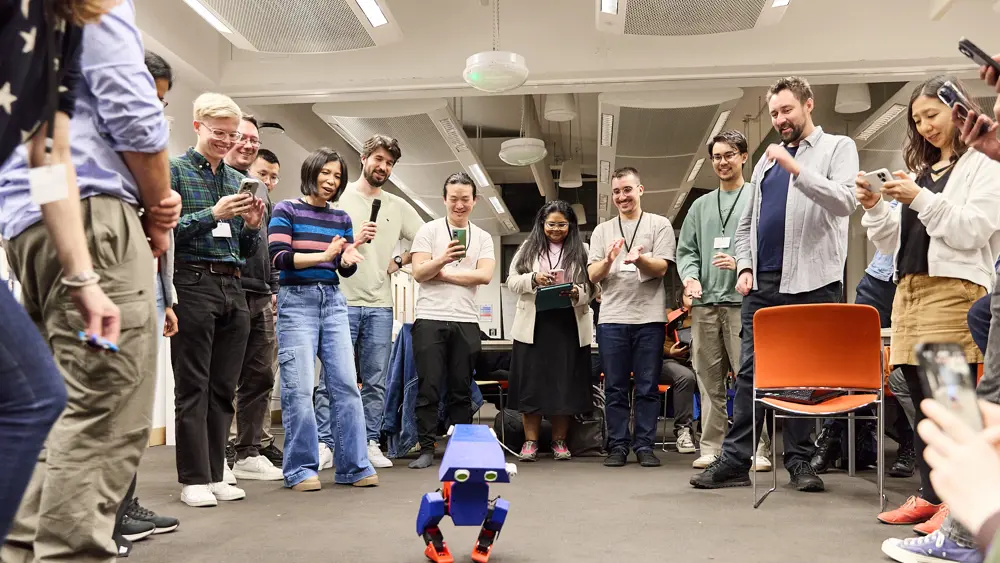
Zaki: A conference is a useful stress test. The equipment is transported, installed quickly and demonstrated repeatedly by different people in a busy environment.
The integration continued to operate throughout that use, which was important. Tactile sensors can perform well in a controlled laboratory experiment but still fall short on wear, repeatability or ease of integration. For the technology to become useful beyond a research group, those practical qualities matter as much as a strong individual result.
ICRA also reinforced that there is no settled answer to tactile sensing. Researchers and companies are exploring optical, magnetic, piezoresistive and other approaches. Different applications may continue to demand different combinations of sensitivity, durability, cost and form factor.
Rich: For someone integrating a hand, the sensor cannot be treated as an isolated component. It needs to fit, communicate with the rest of the system and keep producing useful information after repeated contact.
The field has produced many impressive demonstrations. The harder step is making an integrated system dependable enough that other researchers and engineers can build on it.
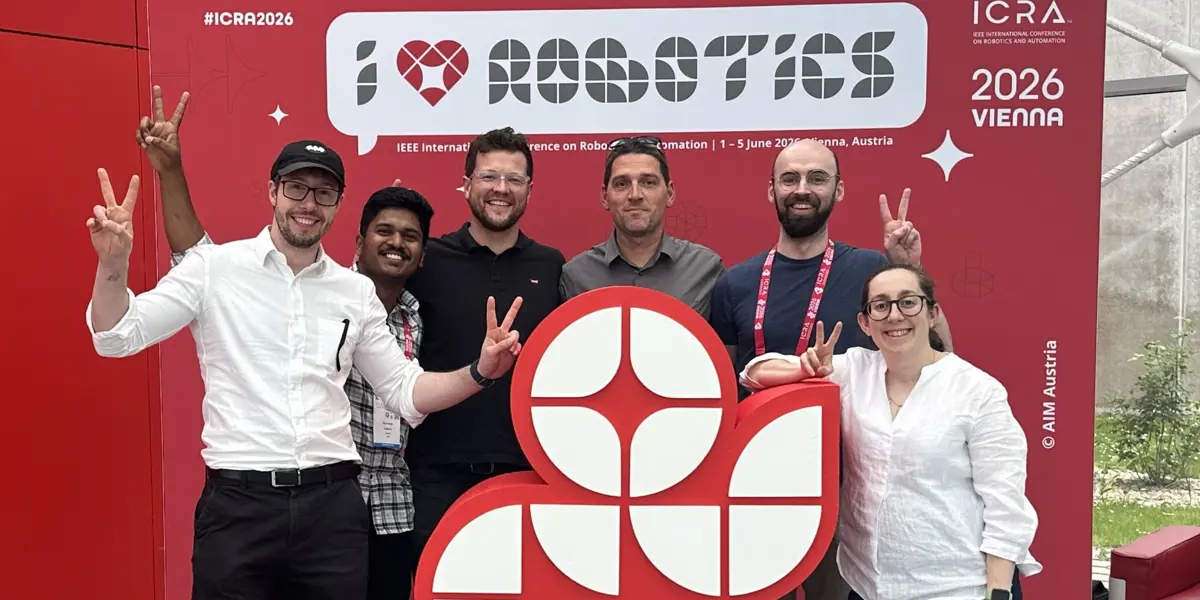
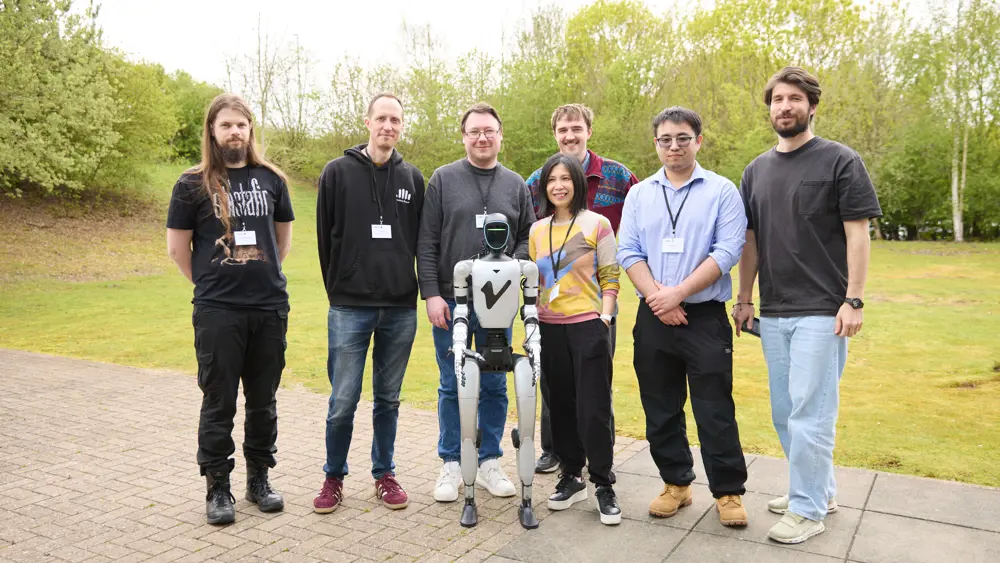
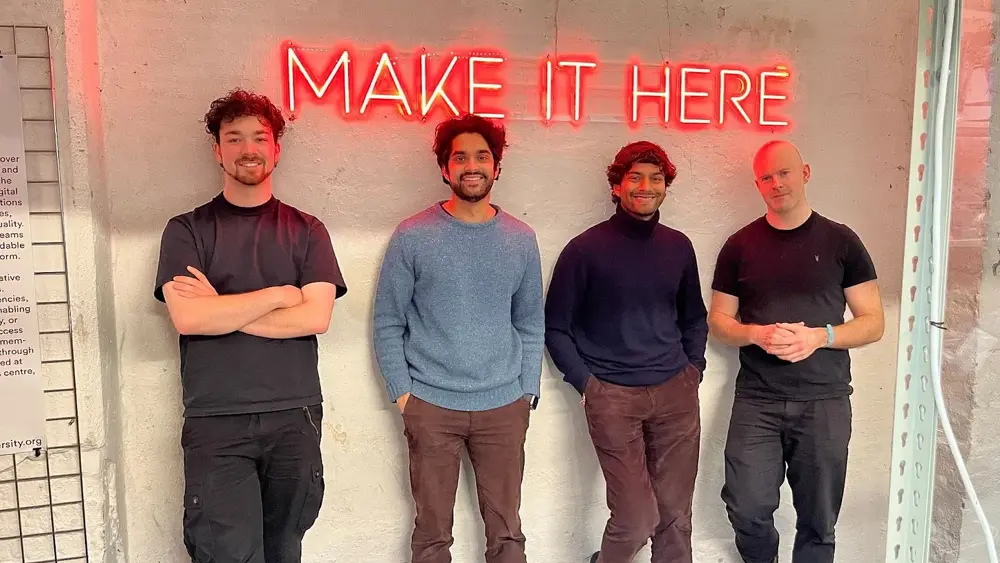
The Touchlab team at ICRA 2026.
What remains unresolved?
Zaki: Producing tactile data is only one part of the problem. The robot still needs models that can interpret that information and generalise across different objects, tasks and environments.
We are working on scaling the slip-detection capability and making the sensing useful to customers without requiring every team to build its own complete learning system from the beginning.
There are also questions about where sensing is needed. Fingertips are critical, but humans use contact across the fingers, palm and rest of the hand. Expanding the sensorised area while preserving durability and ease of integration is an important direction.
Rich: For me, a revealing benchmark is very ordinary: lids on things.
Unscrewing the lid of a medicine bottle or an ink container requires the hand to locate the object, establish the right grip, apply rotational force, detect whether the lid has moved and recover when something is slightly different from the last attempt.
A robot might perform that task once in a carefully arranged demonstration. Doing it reliably across bottles of different sizes, materials and conditions is much harder. That kind of robustness would represent meaningful progress.
Which book, film or television programme should people explore to understand more about your project?
Rich: Red Dwarf. It includes a versatile humanoid robot, but it also captures some of the absurdity that comes with imagining machines operating alongside people.
Zaki: The Peripheral. Its treatment of teleoperation is particularly relevant: the idea that a person could act through a remote physical system, with sensing helping to preserve a meaningful connection to what that system is doing.
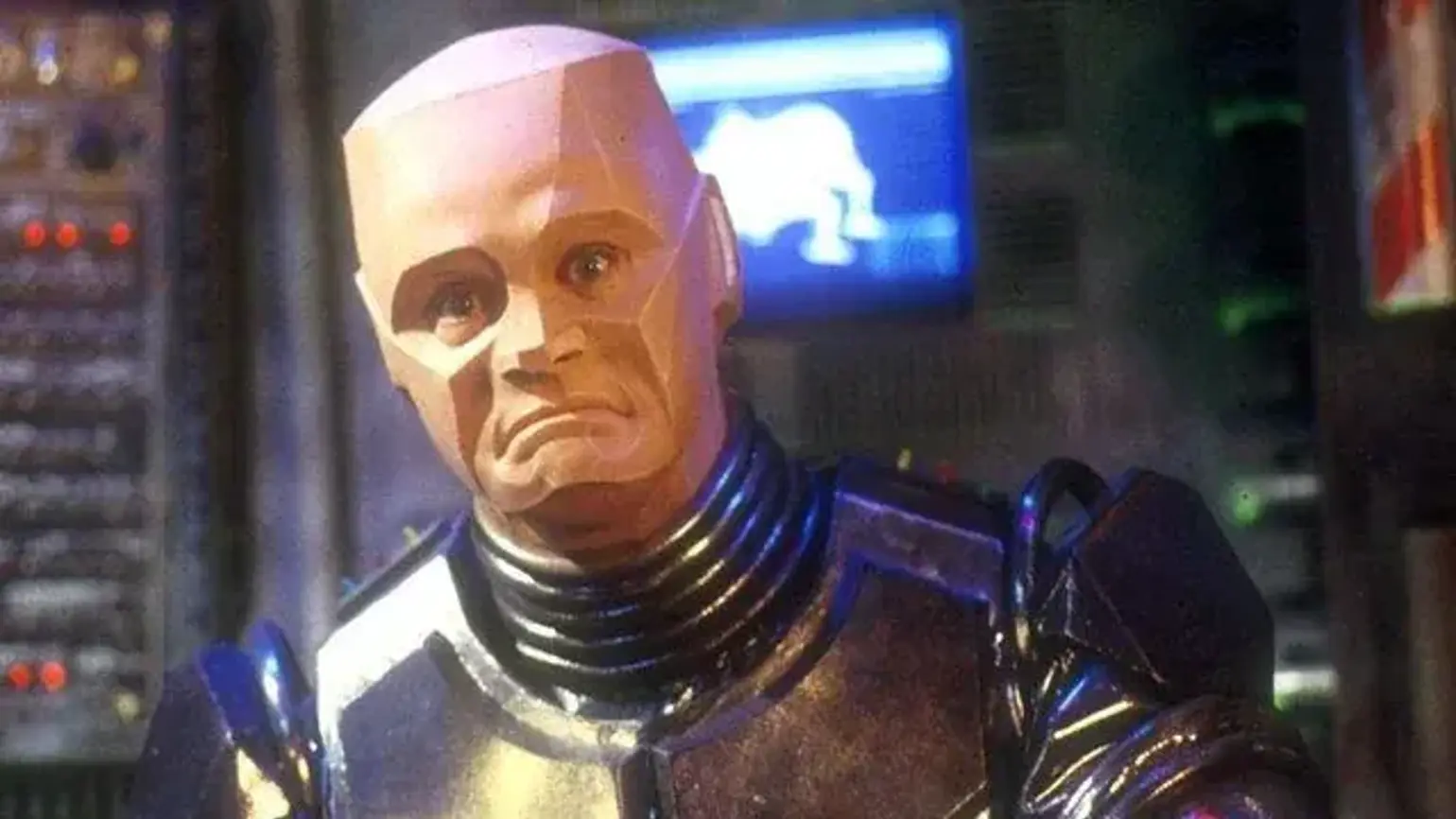
Red Dwarf – a British science fiction comedy programme created by Rob Grant and Doug Naylor.