
Programme Director Claire Donoghue recently launched the first funding call for her programme, Hypersensory Intelligence: Olfactory Perception. We sat down with her to explore the breakthroughs it could unlock, and the long-term futures it could lead to.
We can teach computers to see and hear. Why should they learn to smell?
The air around us is full of information that humans can't read. Volatile organic chemicals carry signals about our health, our food, and the state of our environment, which biological systems have been decoding for hundreds of millions of years. A compelling proof is dogs, who can aid humans in everything from detection to diagnosis with their exceptional sense of smell.
Thanks to recent advances in AI, we’ve reached the point at which it can articulate what a photograph of the Niagara Falls looks like, write a score of music, and predict the exact composition of a protein. For decades, analytical chemistry has allowed us to identify and measure volatile organic compounds in highly controlled laboratory settings. But AI algorithms still can’t smell, something that would have high value applications to our day-to-day lives. This gap struck me as significant, and one we should concentrate our efforts on trying to close.
The aim of my programme, Hypersensory Intelligence: Olfactory Perception, is to make that invisible chemical world computationally legible, and eventually to build a general-purpose digital sense of smell.
Why might this be possible now – and why hasn't it been done before?
The processing of vision and language both took off in the same way. Standard sensors, large-scale shared datasets, and representations learned from all the data that’s available to us. However, smell didn’t follow the same pathway, so the field ended up as a scatter of clever, one-off systems, each solving its own problem but none of them adding up to a general capability.
The first ‘e-noses’ were built in the 1980s, at the University of Warwick. This history has taken the field a long way, but e-noses are nowhere near as commonplace as cameras. One of the primary challenges for the field is how to design a general-purpose sensor, because of a lack of clarity on which signals are the most important to capture. The number of applications are enormous and the digital olfaction community has already made promising progress in the verticals. I believe that for volatile organic chemical sensing to emerge as a new capability class, to the extent that computer vision exists, we need to conduct signal discovery and representations learning in conjunction with sensor design, as well as leverage a cross-domain dataset to build a general-purpose tool.
What's changed, in recent years, is the scientific underpinning. We’ve become much better at understanding how animals smell, with the Nobel Prize having been awarded for this in only 2004. We now have evidence that the chemical space of smell has a learnable structure, and we’re seeing early machine learning papers being published for digital olfaction. Efficient general-purpose olfaction is feasible in nature – a fruit fly gets by on around fifty receptor types and still differentiates between enormously complex odours.
Many of the volatile organic chemicals in nature arise from shared metabolic and microbial processes. AI can learn from raw chemical datasets, which could yield successes in data-scarce challenges and allow us to identify a complex pattern of markers as opposed to a single biomarker molecule. In addition, the hardware required for olfaction has evolved over the past decade. To give just two examples, advances in protein engineering could enable rapid customisation of sensors to scents, or miniaturisation of lab-grade sensing on a path to the mass market. Both of these only increase the value of building the data and representations now. The missing piece is having a shared foundation, and that’s what I want ARIA to catalyse for the community.
How might this transform people's lives?
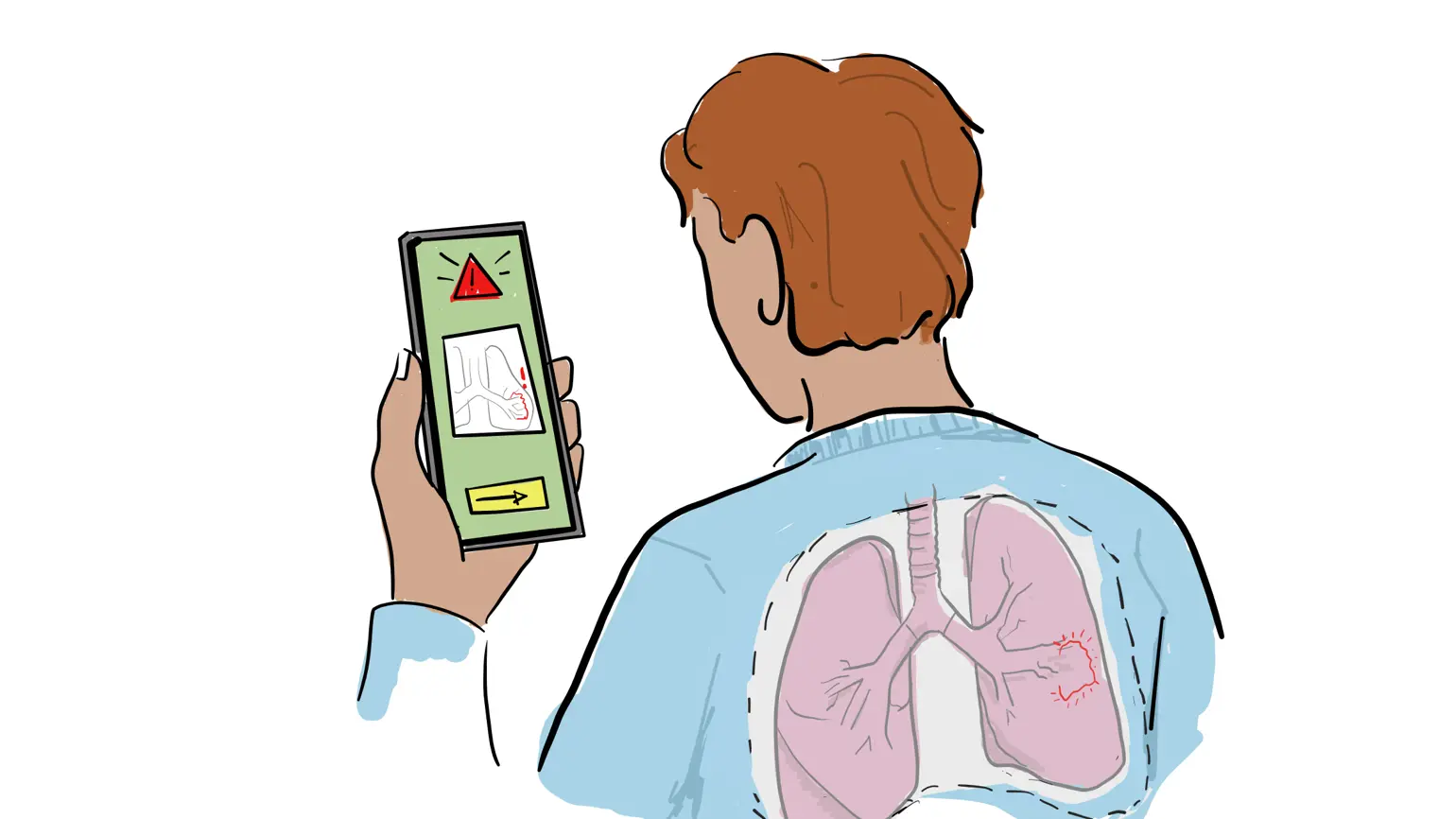
There are so many ways this could be transformational for our day-to-day lives. The key thing to know is that your body’s chemistry often changes before you feel symptoms, and these chemical signals can be present days ahead of any noticeable physiological presentations. If we could pick up those changes in a non-invasive way, a clinician could follow how a condition is behaving over time, rather than relying on the snapshot they get in a time-limited medical appointment.
One example we find promising is detecting flare-ups of chronic conditions like inflammatory bowel disease, which could help us ease patients’ reliance on sampling that’s burdensome and often invasive. There are others: monitoring how someone is responding to a treatment, predicting infectious disease, and assessing blood-based biomarkers without a needle.
Beyond health, where else could this make an impact?
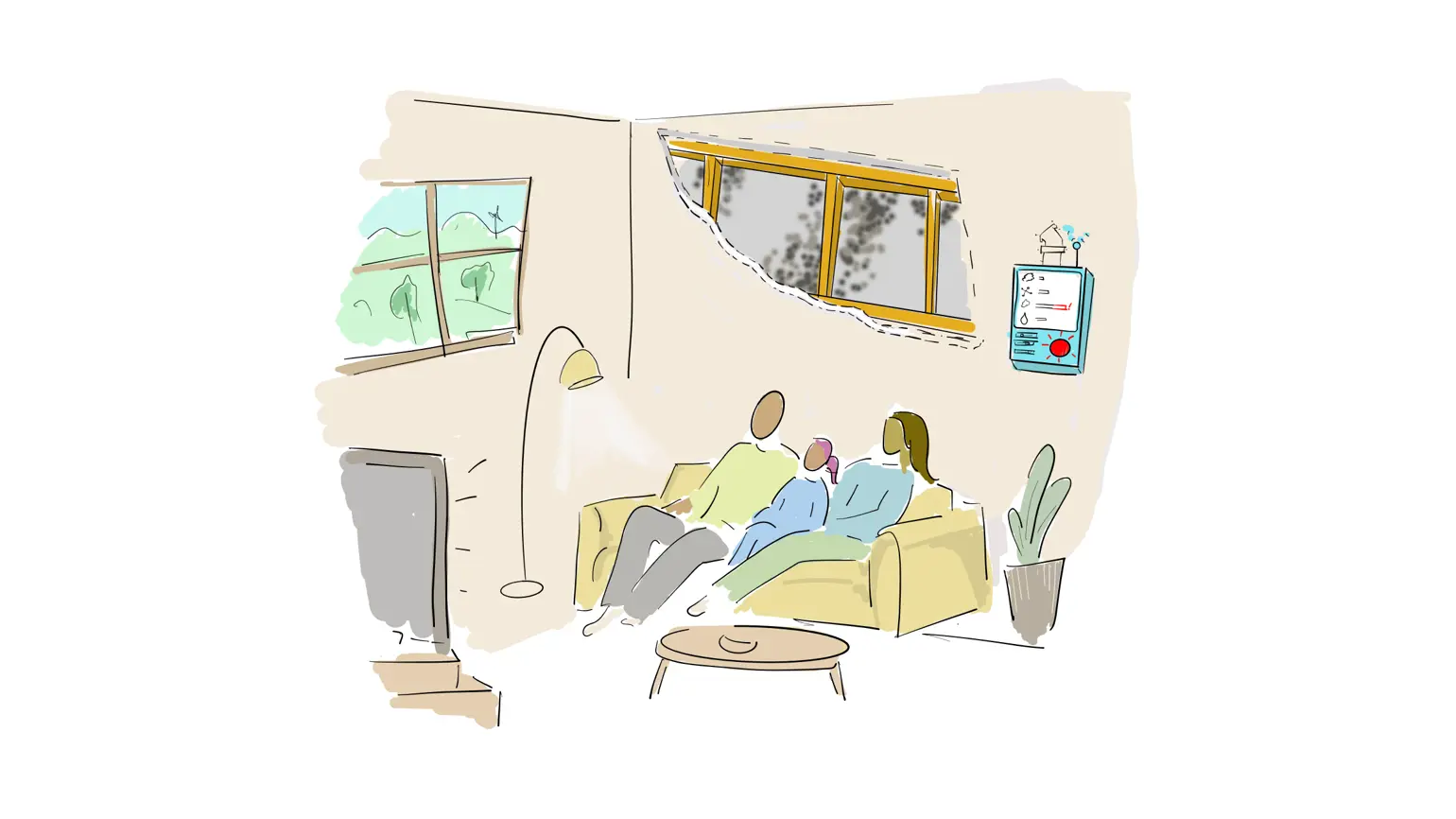
There’s a myriad of applications for the places in which we live and work. In agriculture, this could help farmers read various metrics for soil health, or the welfare of crops and livestock. Indoors, it could sense mould in a damp home before it becomes a health risk. For environmental teams, it could mean monitoring pollutants, airborne pathogens, pests, plant health, or ecological change continuously rather than in snapshots. Each of these is really a test of the same thing: whether one underlying sensing approach translates across very different domains. There are also longer-horizon possibilities that extend beyond biology, like sensing off-gassing of machines in a manufacturing setting, or accelerating workflows for AI scientists.
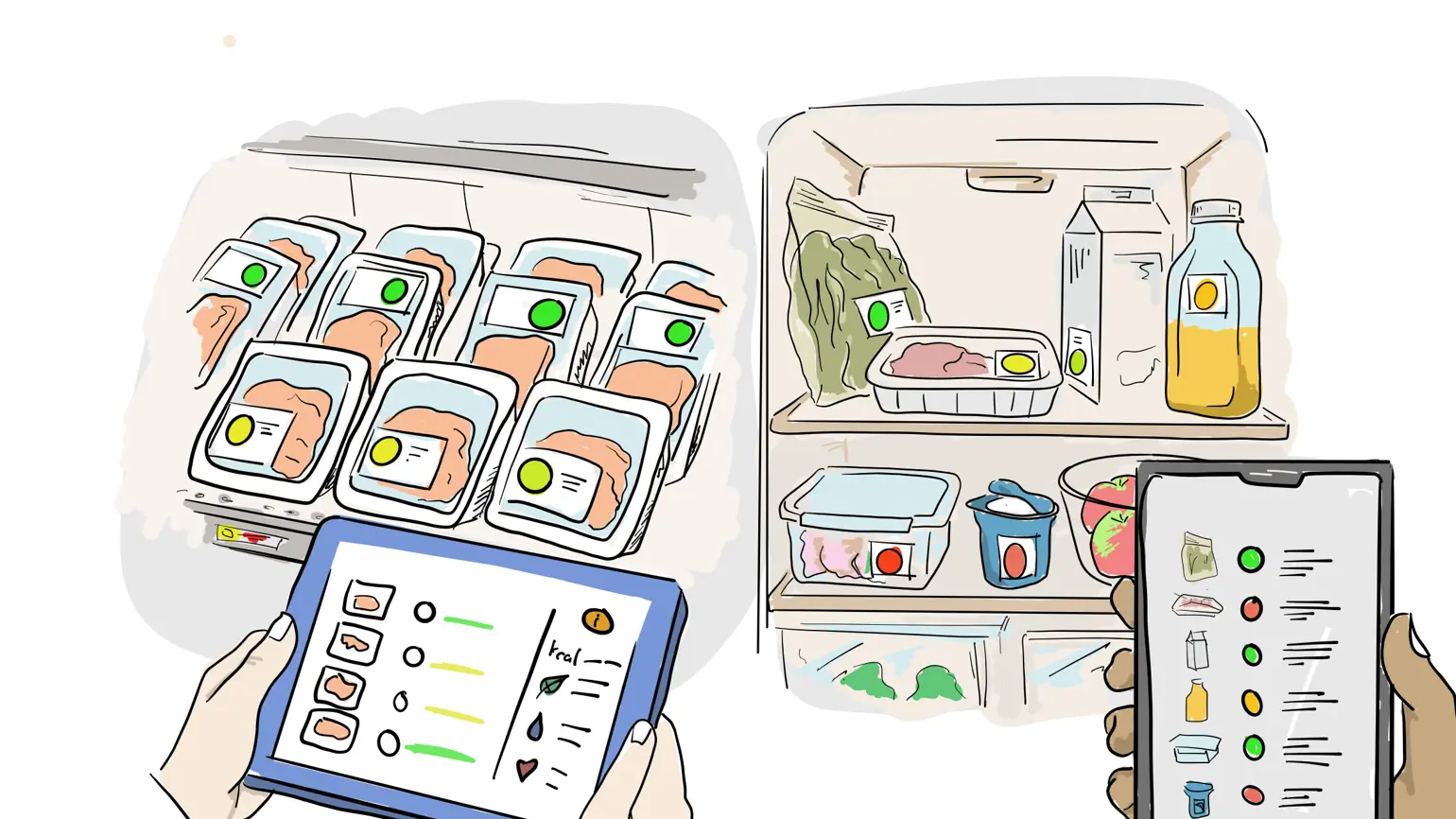
Food is another one. Where food ripens, ferments, and eventually goes off, each of those stages has a chemical signature. Detecting taint or spoilage earlier would enable retailers to more accurately prioritise stock and make more informed expiry decisions. Improving allergen detection and reducing food fraud could help protect consumers’ health.
The examples I’m describing and illustrating here are just a few indicative use cases that my team and I have dreamed up in the process of developing the Olfactory Perception programme. There’s no single, fixed application that we're chasing, because we’re focused on building the first steps of a general-purpose capability that could get us there.
What do we need to do now to make these futures possible?
Every future I've described needs the open dataset, the learned representations that carry across domains, and the novel sensor platform that can leverage those representations. That's what the Olfactory Perception programme exists to unlock.
Right now, we're looking to fund teams who can build the Open Olfactory Resource: people and organisations who bring expertise in novel sensor platforms, data collection, machine learning, chemistry, and metrology, and those with real-world challenges to solve. You might not have all of that under one roof, but we provide teaming tools to help people form cross-disciplinary teams to achieve this. What you'll help us test is the core bet at the centre of the programme: that a shared understanding of smell can open up applications none of us can fully predict yet.
If that's the kind of problem you want to work on, our first funding call is open now, and it closes on 30 September. I’d love to hear from you!
Related articles
Olfactory Perception: our latest funding call
Programme Director Claire Donoghue, on the journey towards her first programme
Read more
Opportunity spaces: three years in
A note from our CEO on our opportunity space evolution
Read more
Moving Targets in AI
Suraj Bramhavar on evolving benchmarks in the Scaling Compute programme
Read more