
Olfactory Perception: our latest funding call

What if machines could smell as well as they can see? What if a mobile phone could one day smell food spoilage or detect disease? These are some of the questions we’re asking in the Olfactory Perception programme – and on Wednesday 12 August, we’re launching our first call for funding. Backed by £65m, we’re making a bold bet that olfaction could become a new digital sense for machines, one that helps us detect important signals that are invisible to us today.
Why olfaction
Animals, plants, and other living systems make extensive use of chemical sensing. They detect food, danger, stress, disease, reproductive state, and territory and environmental change through signals that we humans can barely characterise, let alone interpret robustly. The natural world offers repeated proof that rich chemical information is there to be sensed and used.
The nose of a dog is a chemical sensor: compact, with an enormously complex processing capability. With very little training, it can read important state information across a wide range of domains – food spoilage, search and rescue, disease, drug search, even identifying mould in buildings. The same volatile compounds carry meaning across wildly different organisms: a molecule that signals ripeness to an insect can signal spoilage to us, disease to a dog, and stress to a plant. There is a shared chemical ‘language’ running underneath living systems, and unlike the languages we’ve already taught machines, we’ve only just begun to read it.
And this isn’t confined to the natural world. The same streams of chemical information pour off us, and off everything we make. Every exhaled breath contains thousands of volatile molecules that reflect our biology. Crops release chemical signals when they’re under stress. The chemistry of food changes before it starts to look spoiled to us. Manufacturing processes, ecosystems, and even our own bodies constantly emit rich streams of information into the air around us.
The launch of our first funding call marks an important moment for the programme, but it’s also the product of a much longer journey. What is being published did not appear fully formed. It has been shaped through months of conversations, workshops, discovery calls, reading, challenge, and iteration. This post is about how we got here, and why I’m so excited about where this could lead.
Why we’re tackling this
I accepted the Programme Director role at ARIA after almost 20 years of applying AI and computer vision to scientific challenges. Much of that time was spent inside central AI research labs in a materials and manufacturing multinational and a global pharmaceuticals company, working on problems ranging from material design and manufacturing to clinical trials. Each of these is rooted in chemistry, yet our digital senses today measure other physical properties such as light and sound, or navigate knowledge through written language. What if we could instead sense the chemical state of a material, the failure modes in manufacturing, the authenticity of a product, or the metabolic state of a patient? Each would have benefited from senses beyond the visual, and each meant working alongside analytical chemistry teams to create rich but small datasets. Chemical sensing is immensely powerful in the lab, but not as pervasive as the camera, microphone, or text corpus, whose dominance as a medium is exactly what led to downstream AI breakthroughs.
Across all this diversity, one thread runs through my work: building AI tools that are useful for people, that enhance a scientist’s output whilst keeping the human scientist core to the solution. That begs the question, what if AI could have senses that decode and perceive what we cannot? This is where I believe AI will have its biggest impact: turning the conversation from human-replacement to human extension, enhancing rather than replacing. What if AI could give us the super-sensing capabilities we see in nature?
It was this thread that inspired me to join ARIA and set about exploring what we’re missing by training our algorithms through a human-centric lens. As humans, our enormous capacity for language, vision, and sound has led us to build engineered systems in our own image. Our visual dominance led us to invent a camera in 1816, refine the design, digitise it, and hand it to the masses. By the time the internet arrived, photos were being uploaded at scale, creating the corpus that became ImageNet. This enormous dataset has enabled us to build deep, complex algorithms that learn the low-level structure of images, giving machines the ability to interpret them. We haven’t done that for other powerful senses, senses that could be general-purpose.
Olfaction needs more than a better sensor
Driven by a desire to close this gap, I spoke extensively to researchers, founders, funders, and practitioners across sensing, chemistry, biology, machine learning, and medicine. We ran a workshop and iterated on the thesis, with input from experts, and it became clear that the field has strong foundations. The first digital e-nose was developed in 1982 at the University of Warwick, following many innovations in gas sensors. Teams have demonstrated utility for olfaction in high-value areas such as disease diagnostics, with promising results. More recently, AI solutions have been published that can map perception of odour. Novel sensing capabilities are being proposed and there’s a growing convergence of standards around e-noses. Compelling applications already exist across human, animal, and plant health, agriculture, food science, and consumer products.
I came away with a stronger sense that olfactory perception – and chemical sensing more broadly – is one of those areas where the opportunity is both scientifically fascinating and potentially very consequential, and where now is the right time to run.
What holds this field back is a fragmentation of results, and independent exploration of them. Fragmentation means the signals discovered today come from small datasets, so studies are limited to the strongest molecular fingerprints, detectable at low sample sizes. Much like computer vision before ImageNet, the achievements are impressive, but cross-domain and large-scale learning benefits can’t yet be exploited.
And unlike computer vision, the equivalent of the camera has not yet emerged. In my discovery process, I learned about active frontiers for the sensor itself: new approaches to sensing, spanning G protein-coupled receptors (GPCRs), nanopore platforms, metal-organic frameworks (MOFs), and printed polymers, mean sensors are still being invented. In some cases, they’re becoming more programmable and tuneable rather than fixed. I was excited about this because it revealed that the sensor layer is still part of the research frontier, and it surfaced the question at the heart of the Olfactory Perception programme: how do you design a general-purpose sensor before you’ve discovered the signals it needs to detect?
What we’re betting on
The answer is that in olfaction, the sensor and the representation have to be built together. Computer vision benefited enormously from the combination of scalable image capture, shared datasets, and models that could learn useful representations from them. Olfaction doesn’t yet have an equivalent foundation, the sensing remains fragmented, and datasets are limited.
We therefore need to build a shared data resource that helps the field learn which chemical signals matter, how they’re structured, and how future sensing systems should be designed to capture them. We believe there is an underlying structure to these chemical signals that can be learned. If that’s true, then machines may be able to robustly sense across domains, rather than requiring a bespoke system for every application.
Our first funding call
We’re going to start by building that foundation. We’re calling it the Open Olfactory Resource (OOR) and it’ll provide infrastructure that many different teams can build on, as well as a way to turn a fragmented process into something far more cumulative. If it works, it’ll unlock a new digital sense: the ability to read the chemical world, and to detect what’s invisible to us today – disease on the breath, contamination in food, hazards in the air.
Our first funding call will fund up to six teams in a three-month sprint to design how the OOR should be built and deliver a pilot dataset. At the end of the sprint, we intend to take forward the strongest team, or recombination of teams, to build and operate the OOR over four years.
The total budget assigned to the OOR is £27m. We need to make a big bet for this to be viable, and we’re looking for teams that can meet the challenge: ambitiously experimental, deeply technical, able to coordinate across a complex ecosystem, and able to lead strategically as we learn.
Read the programme thesis, challenge our assumptions, and – if this vision resonates with you – join us as we grow a community around this work and begin building the foundations together.
Sign up to receive updates on the programme. To support applicants in finding team members, there’ll be an online teaming tool and in-person teaming event. We’ll also run an online webinar on 25 August to answer questions.
Related articles
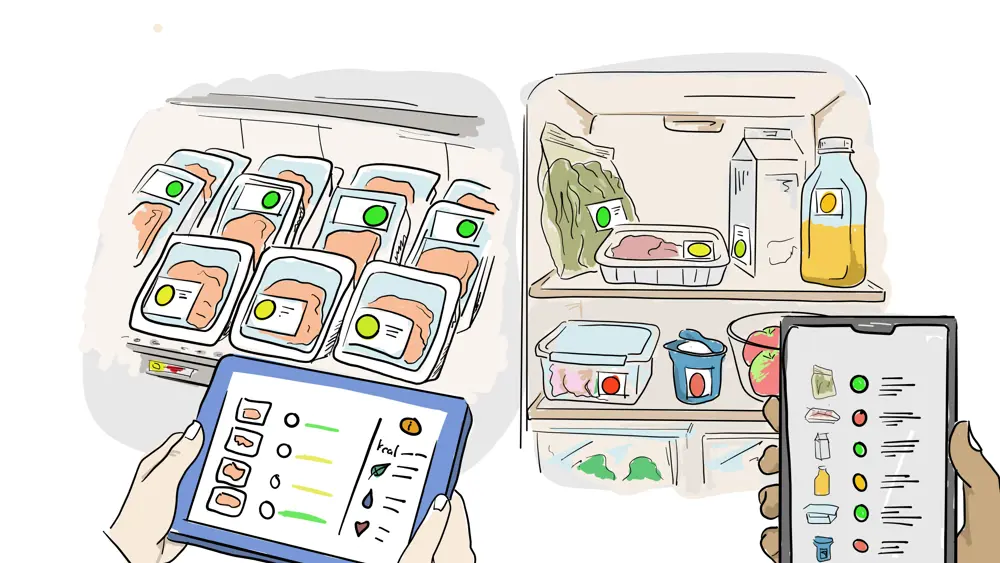
The missing sense in machine intelligence
Olfactory Perception and the breakthroughs it could unlock
Read more
Scaling Compute: from new chips to working systems
Suraj Bramhavar reflects on the journey of Scaling Compute
Read more
Designing organisations for unsolved problems
Introducing two new UK FROs: Echo Labs and Meridial
Read more