
Massively Scalable Neurotechnologies
Backed by £50m, this programme sits within the Scalable Neural Interfaces opportunity space and is seeking radically new ways to deliver responsive neurotechnologies to the brain without brain surgery.
Funded projects
We're backing ten Creator teams to explore new ways of reaching, reading and modulating brain circuits without conventional brain surgery.
Together, they are testing radically different routes to the brain — from engineered cells and inhaled particles to soft robotics, ultrasound and miniature devices.
Three concepts from the portfolio being tested
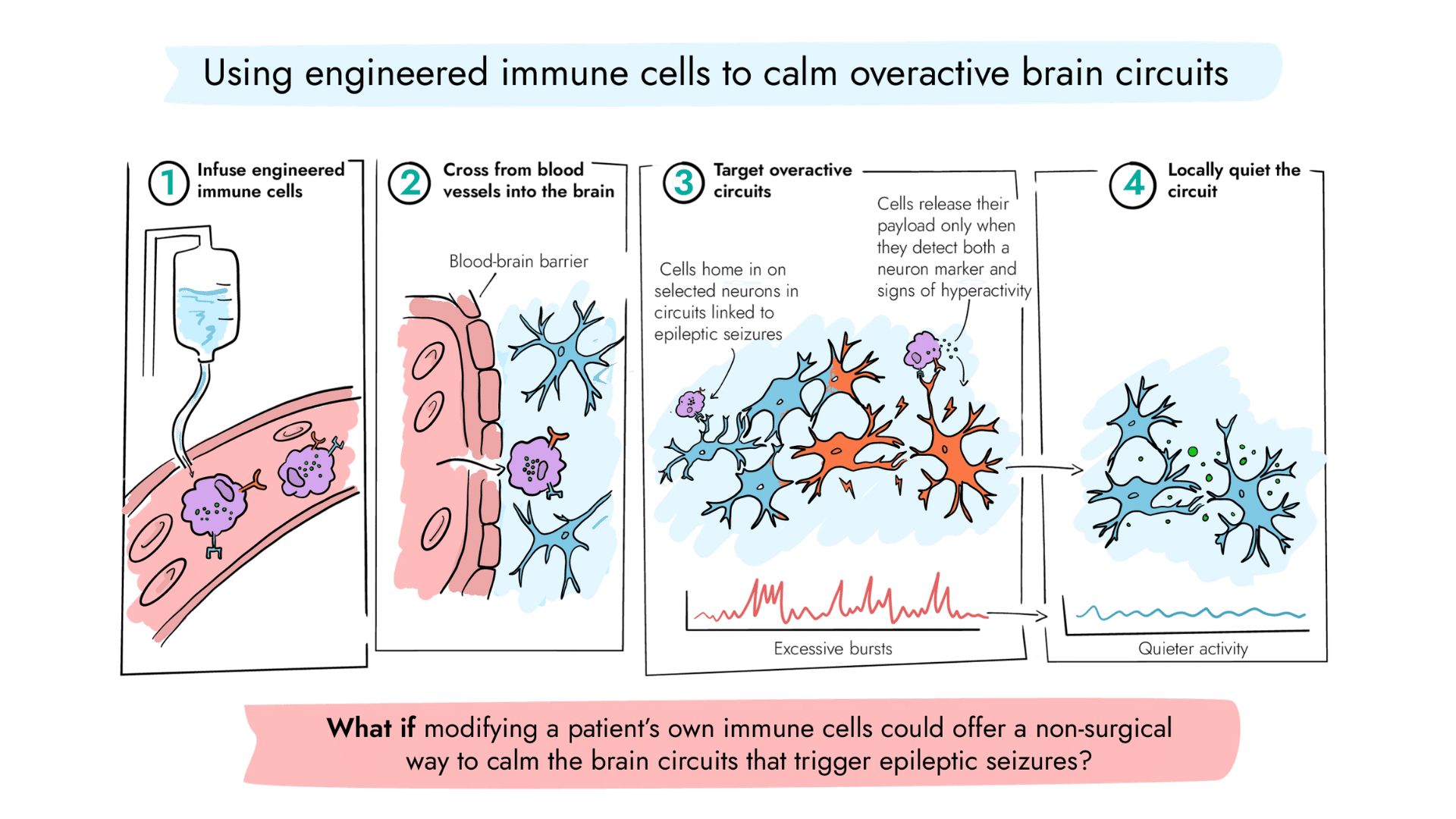
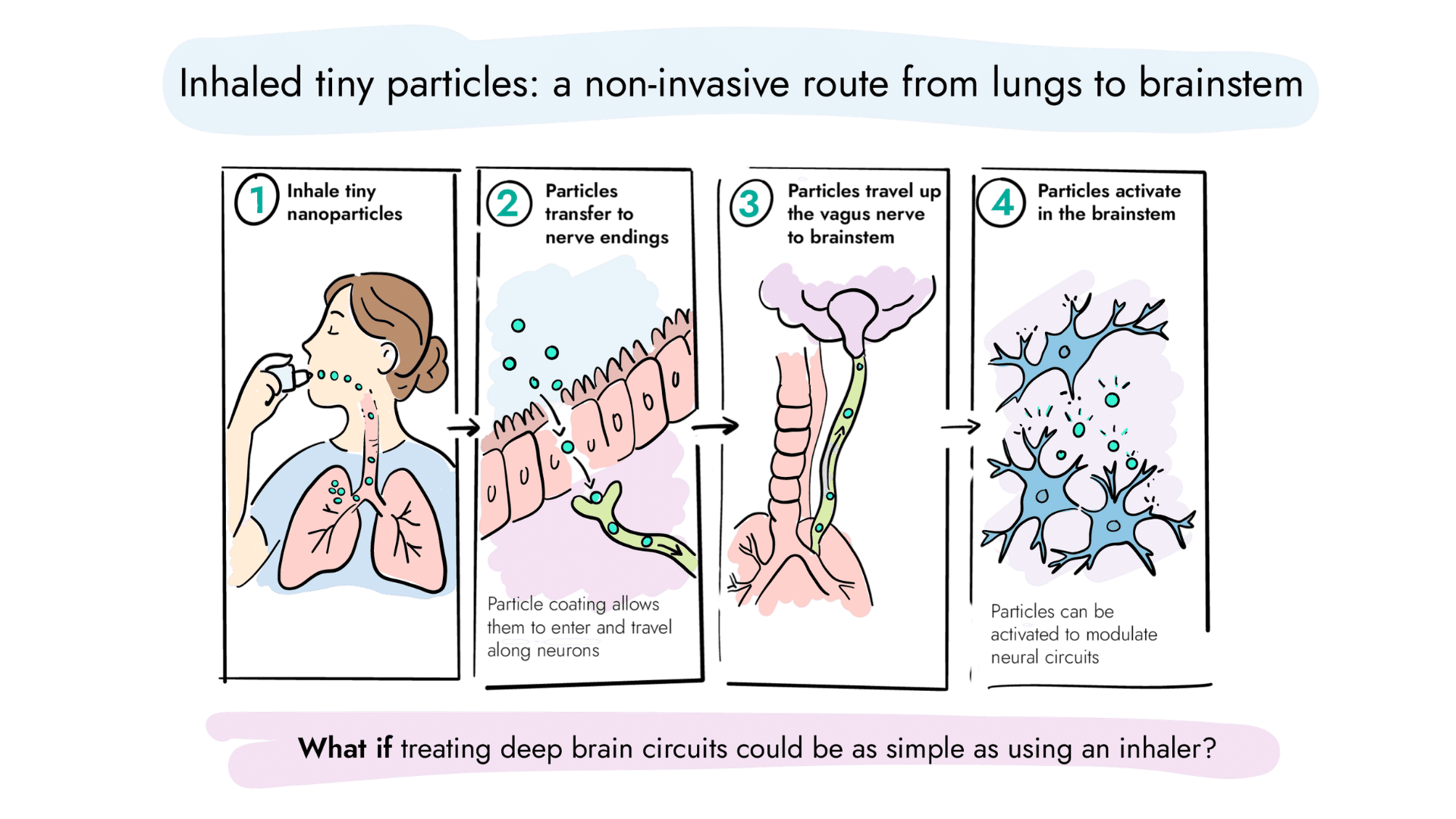
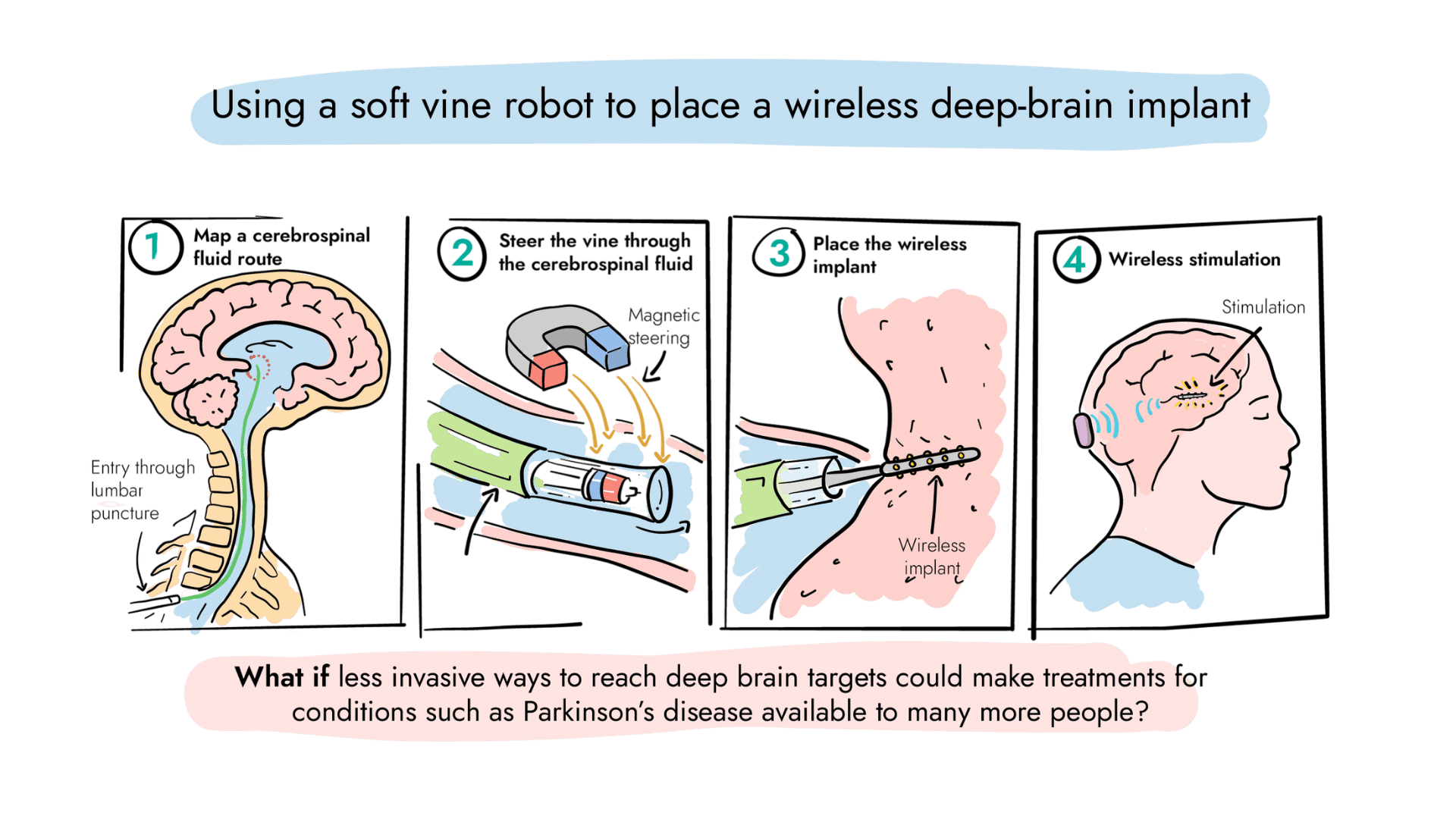
The illustrations below show three of the ten ambitious concepts being explored through MSN. Across all ten projects, we are testing different routes to reach, read and modulate brain circuits without conventional brain surgery. Each is a 36-month preclinical feasibility study: early-stage work to establish which approaches are safe, targeted and technically credible enough to merit further development.
Meet the R&D Creators
Our Creator teams bring together world-leading expertise across neuroscience, engineering, materials science, robotics, synthetic biology and cell therapy.
VINES: Vine Robots for Intracranial Navigation and Endocisternal Stimulation
Pietro Valdastri, University of Leeds
NEURAL-TRAK: Neural Interfaces for Programmable Delivery and Modulation Along Intrinsic Neural Circuitry
Guangzhao Mao, University of Edinburgh
Infusion-Based Engineered Immune Cell Neural Interfaces for Surgery-Free Neuromodulation of Pathological Circuit Hyperexcitability
Soyon Hong, UK Dementia Research Institute at UCL
Ultrasound Contrast Agents for Recording of Neural Activity
Ed Boyden, MIT
Endovascular Acoustic Interfaces for Scalable Neural Biomarker Readout
Yunlong Zhao, Imperial College London
Remote Magnetic Neuromodulation with Bio-Magnetic Nanotransducers
Polina Anikeeva, MIT
Unlocking Minimally Invasive Deep Brain Stimulation with Endovascular Neuromodulation Technology
Nicolette Driscoll, NeuroBionics
ImmunoKnight: Armoured Immune Cells for the Non-Surgical Treatment of Parkinson’s Disease
Yujia Zhang, EPFL
SCENT: Secreting Commensals Engineered for Neural Therapeutics
Henry Lee, Nili Ostrov, Cultivarium UK
Programmable Cellular Delivery Vehicles for Remote Neural Modulation
Alon Galor, DART Biosciences