


Forecasting Tipping Points
Backed by £81m, this programme sits within the Scoping Our Planet opportunity space and aims to enhance our climate change response by developing an early warning system for tipping points.
Translating research into impact
Research doesn’t exist in a vacuum. For an early warning system to be effective, it has to be built on credible data, practical for end-users, and there has to be an interdisciplinary research ecosystem that can maintain, build and improve the system beyond the programme.
Trust in data
Building a credible early warning system depends on our ability to trust the data that underpin it. At the heart of that trust is traceability: how confident can we be in a forecast if we don’t understand how uncertainty flows from observation to decision? We are embedding this traceability into our novel, low‑cost sensing systems operating in challenging and remote polar regions.
Working with the National Physical Laboratory (NPL), the UK’s National Metrology Institute, we are treating the sensing layer like an "internet of things," ensuring every sensor – from a drone in the sky to a buoy in the deep ocean – adheres to rigorous standards and comes with transparent uncertainty.
We’re working across three main areas:
- Metrological best practice: We provide training and templates to ensure all observational data is traceable to the International System of Units. This allows us to characterise uncertainty in a rigorous, transparent and comparable way, across the entire programme.
- Interoperability: To prevent data silos, we are working to common data and metadata standards. This ensures that independent sensing systems can "talk" to one another, creating a seamless, verifiable dataset for global analysis.
- Cascading uncertainty: We aren't just concerned with uncertainty in individual sensors; we track how it propagates through our physical and AI-based models and how it influences forecasts. By linking uncertainty in observations to uncertainty in predictions, we can tell decision-makers not just what might happen – but how confident they should be in that assessment.
Find out more about our partnership with NPL here.
The future field
The challenges we face are too complex for any single discipline to solve. To secure the long-term future of climate monitoring, we must build a new kind of research ecosystem – one where disciplinary silos are broken and experts work as a single unit. We are pivoting talent from across the UK and empowering a new generation to build a field that is as resilient as the systems we hope to protect.
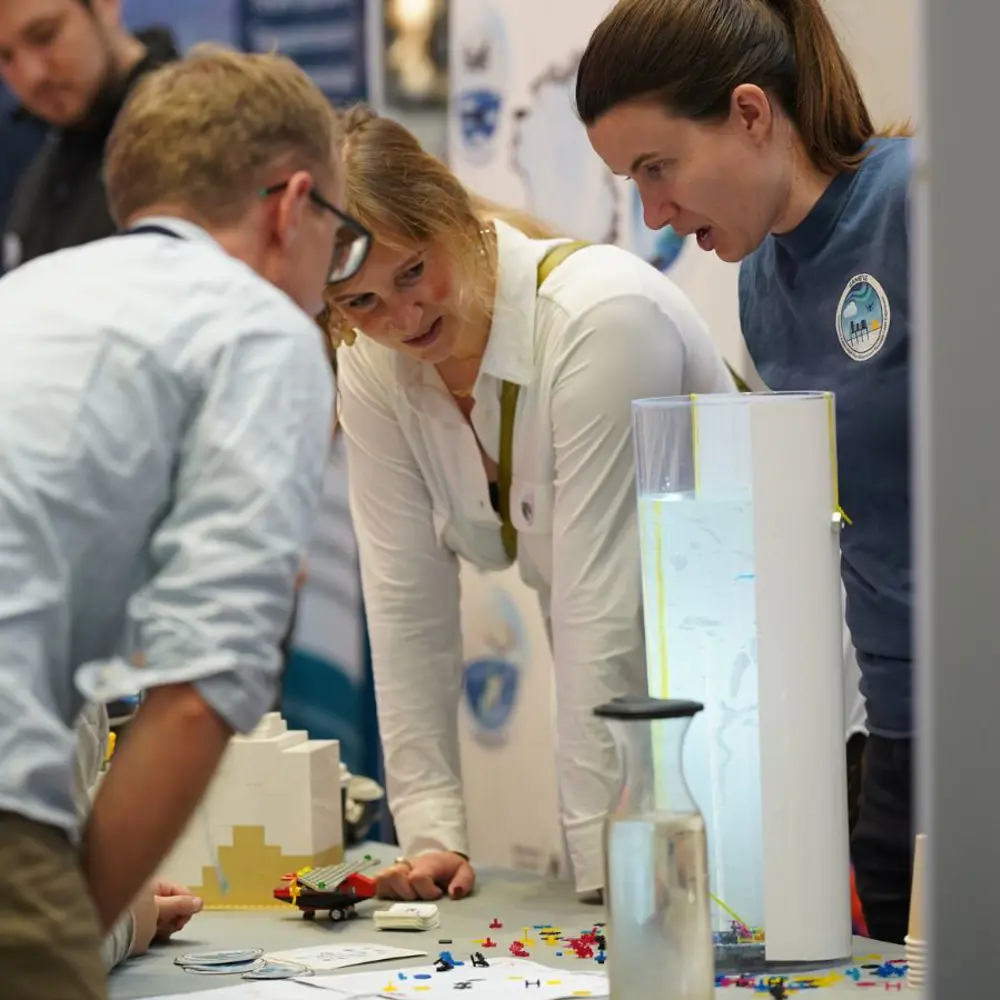
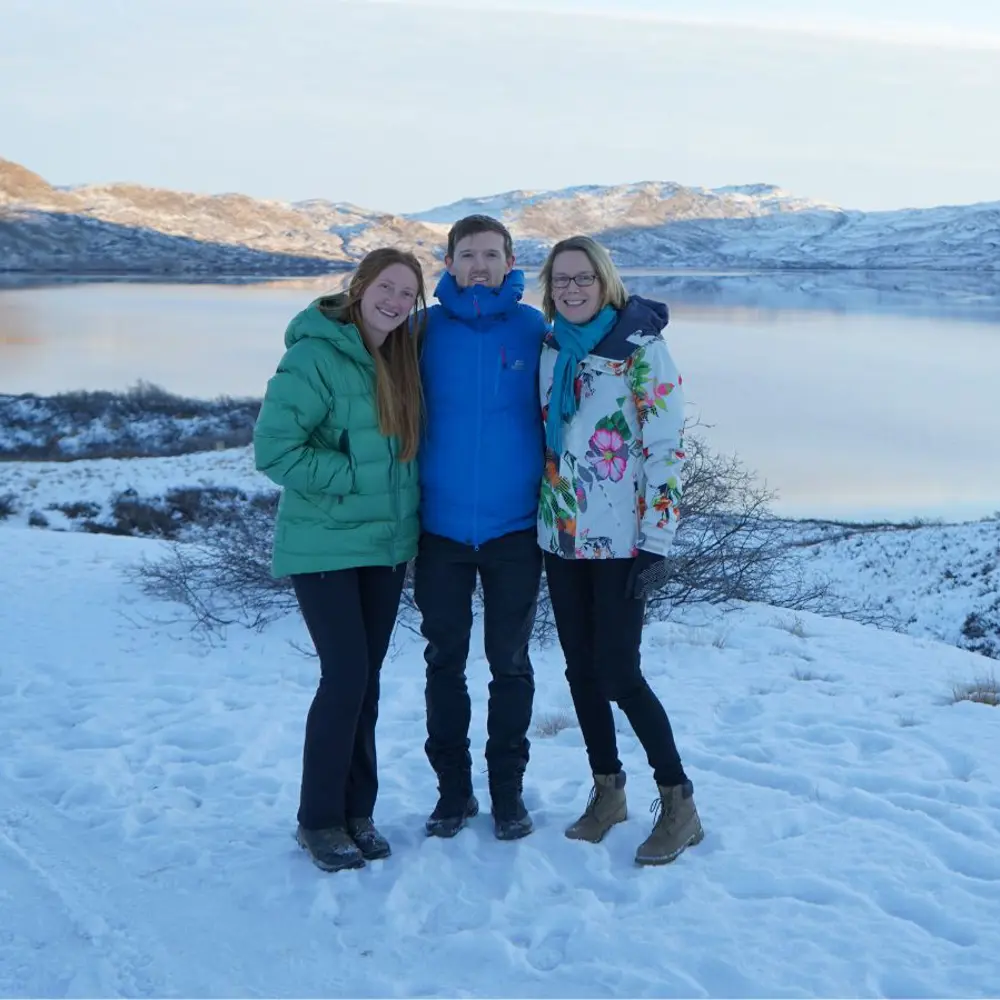
Unifying the field
We are pivoting physicists, computer scientists, and mathematicians into the climate field, lowering the barrier for talent entry outside the traditional earth sciences.
To prevent knowledge silos, we are training these new experts – alongside a substantial cohort of PhD students – through a custom core curriculum. By mastering the fundamentals of oceanography, glaciology, and tipping dynamics together, we ensure that a machine learning engineer can collaborate effectively with a polar field scientist.
In tandem, we are connecting this new community across institutions, linking academia, industry, and national labs to share hands-on experience and build a lasting network of expertise.
Are you a technologist, engineer, or mathematician looking to apply your skills to the climate crisis? We can help you understand exactly how your specific technical background can benefit the programme and match you with a project team that needs your skills.
Engaging decision-makers
We’ve partnered with the Ditchley Foundation and Telescope to bridge the gap between our scientific teams and the decision-makers, and turn early warning signals into action.
By convening diverse global experts – from government, finance, community leaders and local industries – Ditchley and Telescope are helping us translate probabilistic forecasts into concrete resilience strategies, ensuring the Early Warning System is co-designed for maximum societal impact.